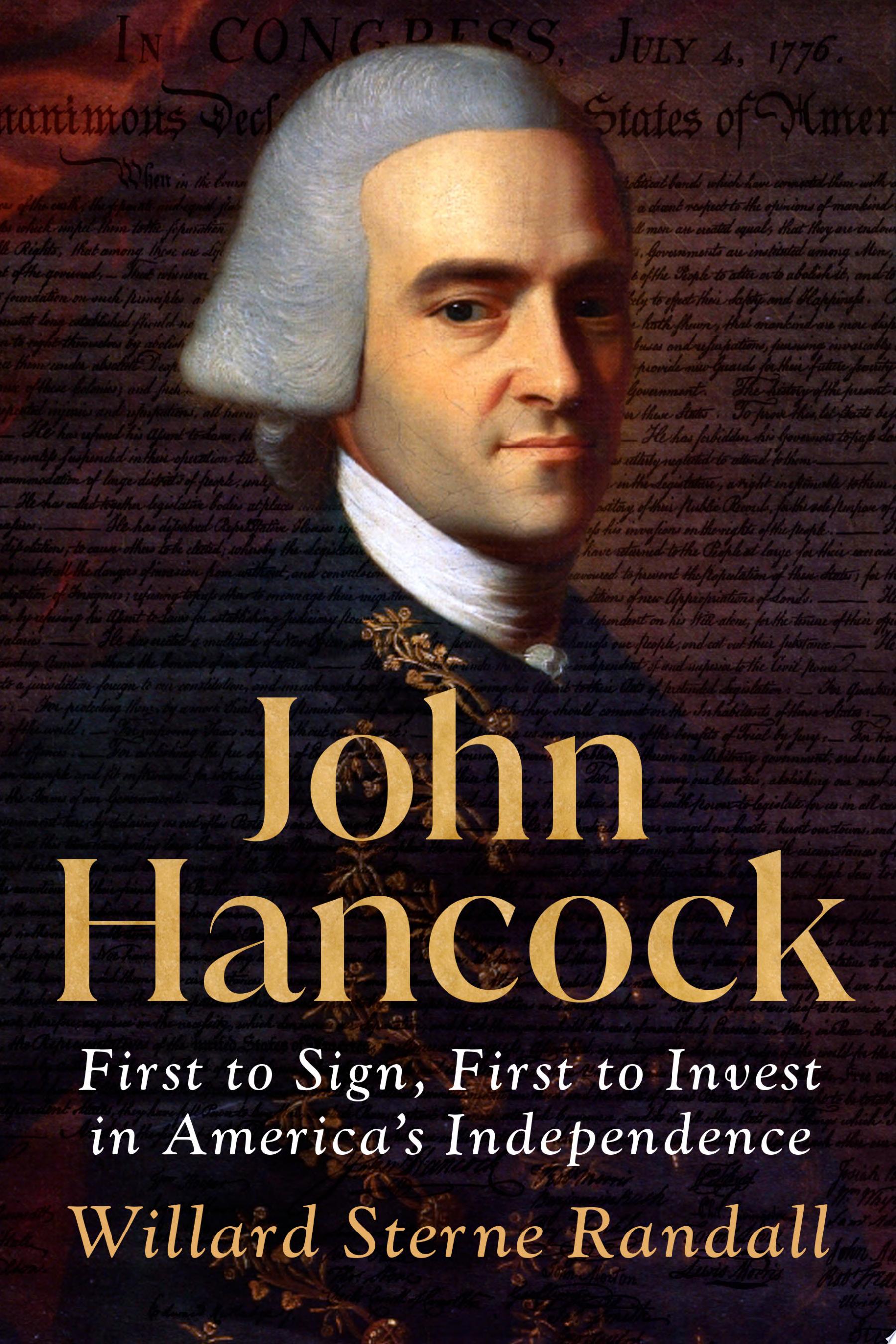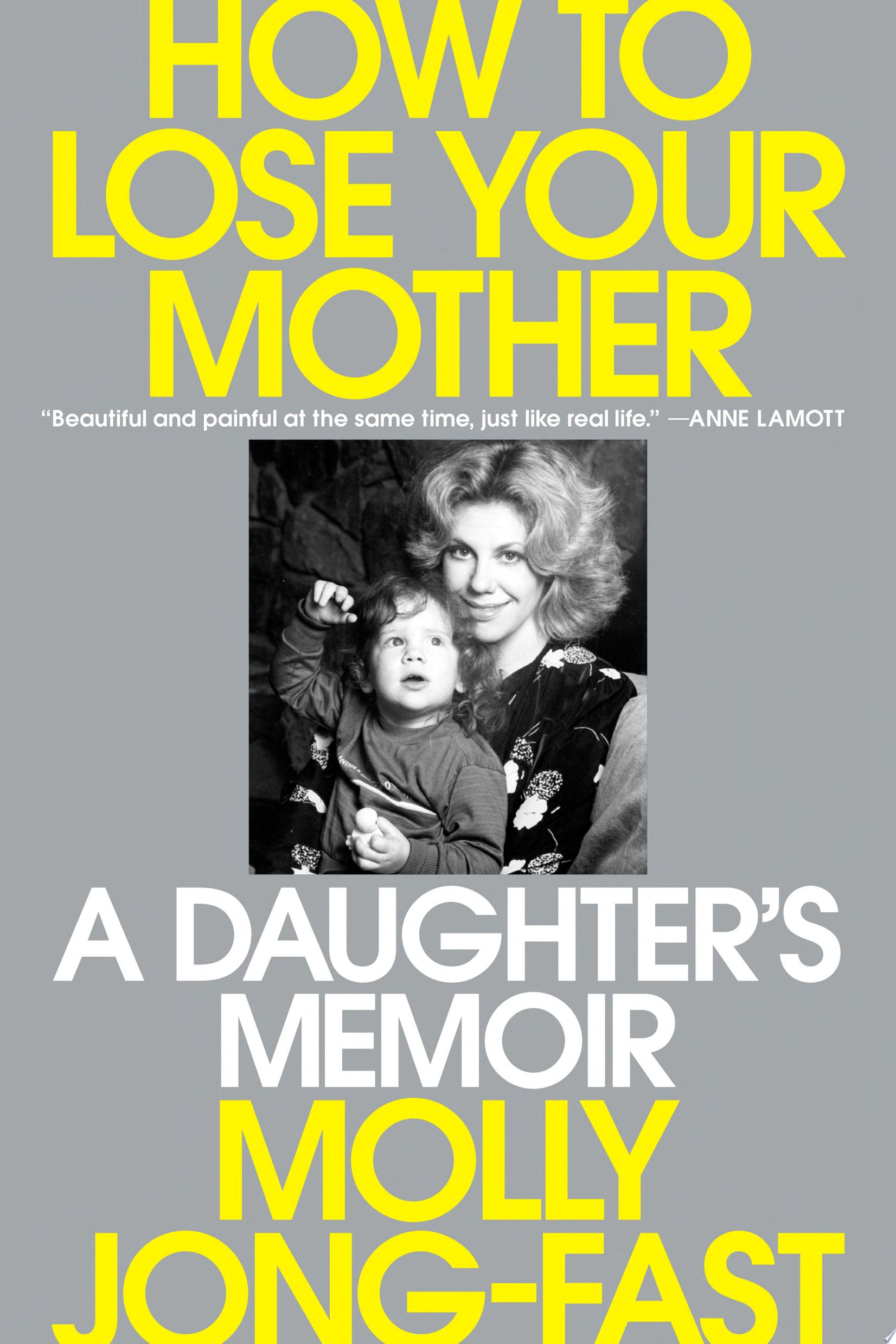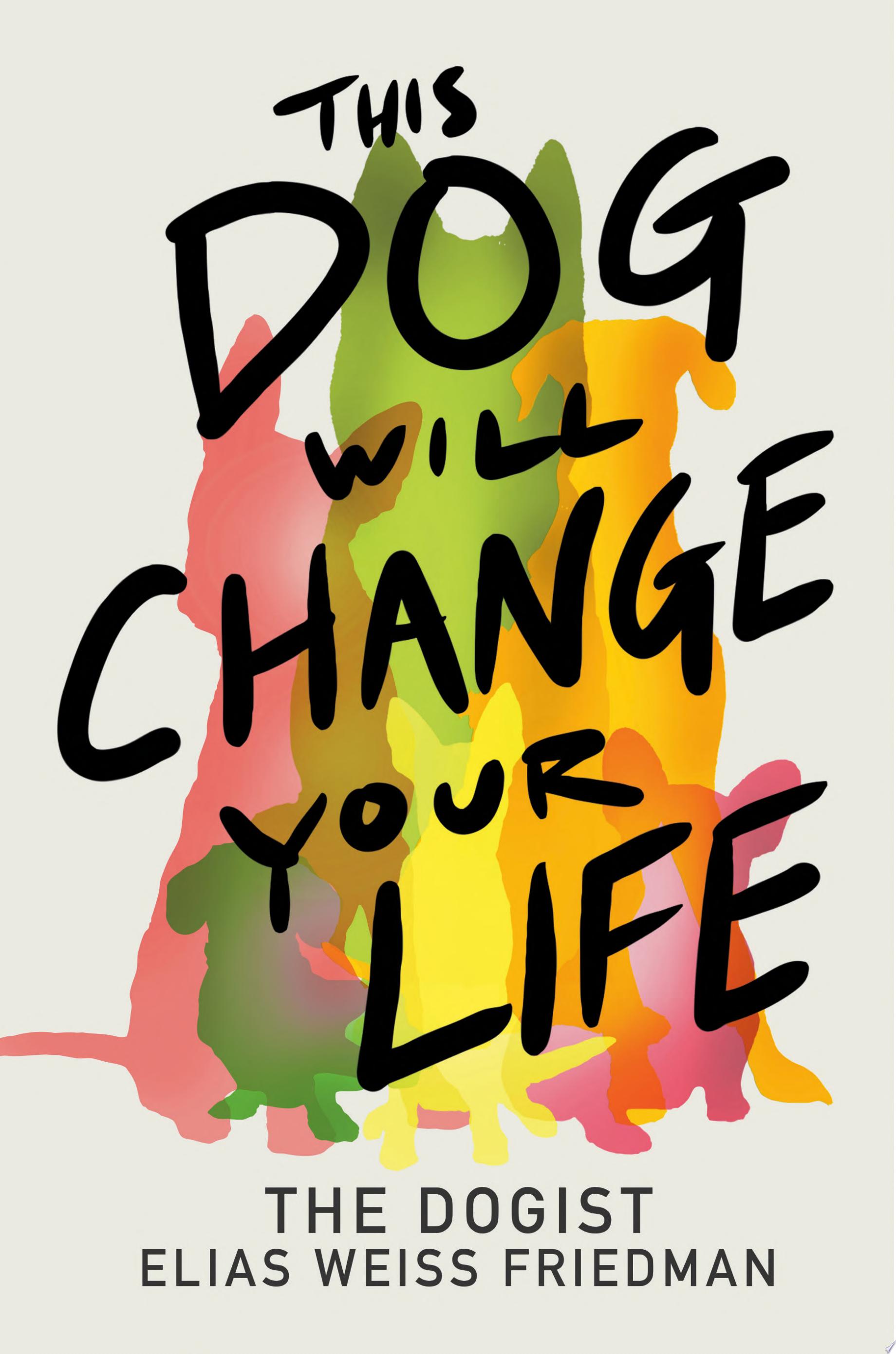
Featured Reads

Category
Audience
Image for "Eight Million Ways to Happiness"

Eight Million Ways to Happiness

A Japanese cultural historian shares a path to joyful living drawn from her nation’s unique approach to spirituality and nature, offering a “fascinating” (Wintering author Katherine May) blend of memoir, cultural reporting, and practical guidance for anyone struggling to find balance in our turbulent modern world.
Everyone’s in the pursuit of happiness, but few know how to attain it. Millions around the world have turned to Japan for advice on finding their Ikigai, or summoning The Courage to Be Disliked. Japan’s spiritual traditions hide in plain sight, forming the basis of so much of what we love about the country’s culture. Without Japan’s spiritual sustenance, Jiro wouldn’t dream of sushi; Hayao Miyazaki’s films wouldn’t spirit us away; and Marie Kondo wouldn’t spark joy.

In her book Eight Million Ways to Happiness, Hiroko Yoda offers the culmination of her decade-long odyssey into the spiritual heart of her homeland. Readers follow Hiroko as she trains as a Shinto shrine-dancer, partakes in Buddhist funeral rituals, ascends holy mountains with Shugendo ascetics, and meets one of Japan’s last living itako, a traditional mystic. Her stories—personal, cultural, and historical—offer life lessons for readers of any background.

Hiroko awakens readers to the idea of a traditional spiritual flexibility that seamlessly coexists with the modern secular world, fortifying us through life’s inevitable ups and downs. We are all subject to forces beyond our control, but we are also part of a bigger natural system that can strengthen us—if we learn how to reconnect with it.

Image for "The Sea Captain's Wife"

The Sea Captain's Wife

The true story of the first female captain of a merchant ship and her treacherous navigation of Antarctica's deadly waters, from the New York Times bestselling author of The Widow Clicquot

Summer, 1856

Nineteen-year-old Mary Ann Patten and her husband, Joshua, were young and ambitious. Both from New England seafaring families, they had already completed their first clipper-ship voyage around the world with Joshua as captain. If they could win the race to San Francisco that year, their dream of building a farm and a family might be within reach. It would mean freedom. And the price of that freedom was one last dangerous transit—into the most treacherous waters in the world.

As their ship, Neptune’s Car, left New York Harbor and sailed down the jagged coast of South America, Joshua fell deathly ill and was confined to his bunk, delirious. The treacherous first mate, confined to the brig for insubordination, was agitating for mutiny. With no obvious option for a new captain and heartbroken about her husband, Mary Ann stepped into the breach and convinced the crew to support her, just as they slammed into a gale that would last 18 days. Determined to save the ship, the crew, and their future, she faces down the deadly waters of Drake’s Passage. 

Set against the backdrop of the California Gold Rush and taking us to the brink of Antarctica, The Sea Captain's Wife finally gives Mary Ann Patten—the first woman to command a merchant vessel as captain — her due. Mazzeo draws on new archival research from nineteenth-century women’s maritime journals and on her own expedition to the Southern Ocean and Antarctica in search of Mary Ann’s route. Thrilling, harrowing, and heroic, The Sea Captain's Wife is the story of one woman who, for love, would do what was necessary to survive.

Image for "When All the Men Wore Hats"

When All the Men Wore Hats

A sympathetic and illuminating account of the stories of John Cheever, and the intersecting life and work of the legendary writer John Cheever, as told by his eldest daughter.

The Stories of John Cheever, published in 1978, brought together some of the finest short fiction ever written. The collection was honored with the Pulitzer Prize and the National Book Award, and it would go on to sell millions of copies and to define the American short story and shape generations of writers. Cheever’s chronicles of modern life both emerged from a distinctly American culture and also created it—inspiring everything from Mad Men to a Raymond Carver story, from rock songs to a Seinfeld episode.
Growing up, Susan Cheever, John Cheever’s eldest child and only daughter, read what he read, heard what he heard, bantered and gossiped with him and her brothers and mother at the dinner table, and later watched her father type on the cheap yellow paper he favored. A daughter much like Susan appears in many of Cheever’s stories and a family much like theirs is at the center of his writing.


In When All the Men Wore Hats, Susan Cheever looks back on her father’s work and seeks to understand the connections between art and life. How did a bit of local gossip, a slice of Greek myth, and a new translation of Madame Bovary somehow become a brilliant gem like “The Country Husband” or “The Swimmer”? In her 1984 book Home Before Dark, published two years after her father’s death, Cheever wrote movingly about her father and the secrets he kept, but here, years later, she tells the story of the remarkable stories themselves, six of which appear in full in the book’s appendix.

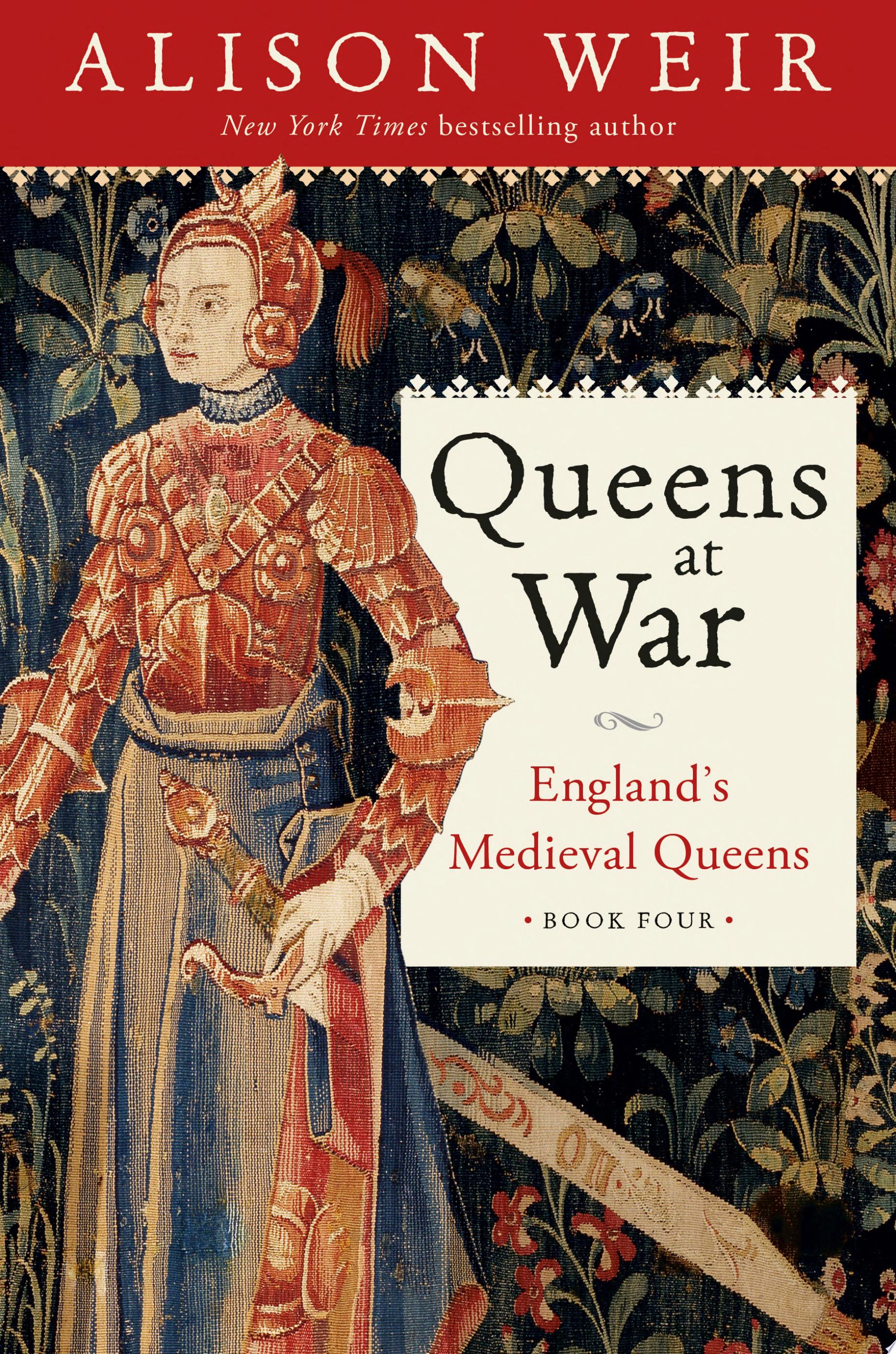
Image for "Queens at War"

Queens at War

The tumultuous period in English history that marked the end of the medieval era and the rise of the Tudors comes to stunning life in the final volume of Alison Weir’s four-part Medieval Queens series, filled with dramatic true stories chronicling the turbulent reigns of the last five Plantagenet queens.

The fifteenth century was a violent age. In Queens at War, Alison Weir chronicles the five queens who got caught up in wars that changed the courses of their lives: the Hundred Years’ War between England and France, and the Wars of the Roses between the royal Houses of Lancaster and York.

Against this tempestuous backdrop, Weir describes the lives of five Plantagenet queens, who occupied the consort’s throne from 1403 to 1485. Joan of Navarre was happily married to King Henry IV but was accused of witchcraft by Henry’s heir and imprisoned. Paris-born Katherine of Valois’s political marriage to Henry V was meant to bring peace between England and France. It didn’t, and Henry died during the Hundred Years’ War without ever seeing his newborn heir, Henry VI, who was wed to another French princess, Margaret of Anjou, in 1445. In the Wars of the Roses, Margaret staunchly supported her husband and son. Henry’s successor, Edward IV, became embroiled in scandal after he fell in love with and married Elizabeth Widville, mother of the tragic Princes in the Tower. The notorious Richard III usurped Edward’s throne and married Anne Neville, who died after losing her only child, forsaken by her husband.

“Underpinned by extensive reading of original sources” (The Washington Post), Weir’s Medieval Queens series strips away centuries of historical mythologizing to shed light on the genuine accomplishments and bravery of these fascinating female monarchs. Queens at War brings the series to an action-packed close.

Image for "Ain't Nobody's Fool"

Ain't Nobody's Fool

A larger-than-life new biography of country music legend and philanthropist Dolly Parton.

In Ain't Nobody's Fool: The Life and Times of Dolly Parton, Martha Ackmann chronicles the life of an American Original. From her impoverished childhood in the Smoky Mountains to international stardom as a singer, songwriter, actress, businesswoman, and philanthropist, Dolly Parton has exceeded everyone's expectations except her own. During a time when the Beatles set the standard for contemporary music, Dolly appeared on a local country music television show that her high school classmates thought was pure cornpone. The day after her high school graduation, she boarded a bus for Nashville, but record executives turned her down. One said her voice sounded like a screech owl. 

When Dolly finally got her foot in the door, her talent and focus catapulted her to the top of country charts, the pop world, and movie stardom. Yet her success came at a price. Shunned by many in Nashville who saw her ambition as a betrayal of her country music roots, Dolly became the target of death threats, lawsuits, and a judge who threatened to throw her in jail. She nearly collapsed on-stage and later succumbed to depression that pushed her to the brink, but she refused to be counted out and came back stronger than ever developing Dollywood, the amusement park that became the economic engine of East Tennessee, and founding the Imagination Library that provides free books to children around the world. Her philanthropy to health organizations led to creation of the Moderna COVID vaccine. And, finally, she returned to her roots, recording bluegrass albums that became the most celebrated of her unparalleled 60-year career. 

Ain't Nobody's Fool is a deep dive into the social, historical, and personal forces that made Dolly Parton one of the most beloved and unifying figures in public life and includes interviews with friends, family members, school mates, Nashville neighbors, members of her band, studio musicians, producers, and many others. It also features never before seen photographs and unearthed documents shedding light on her family's hardscrabble life. More than anything, Martha Ackmann's fresh and animated new book proves Dolly Parton knows just who she is and she ain't nobody's fool.

Image for "Off the Scales"

Off the Scales

"The inside story of the race to develop Ozempic, and its potentially revolutionary impact on public health and culture. A "cure" for obesity has long been the holy grail for the pharmaceutical industry, one that seemed unattainable until recent breakthroughs in type 2 diabetes research led to the development of Ozempic, a weight loss medication that activates hormones in the stomach, making people feel fuller for longer. The treatment is so effective that it is already disrupting many industries-from healthcare to fast food to fashion-and it has quickly made its creator, Denmark's Novo Nordisk, the most valuable company in Europe. But the impact of these drugs goes far beyond billion-dollar profits; a true long-term cure for obesity could save 40% of American adults from dangerous preventable illnesses. And as their success continues to grow, one question looms in the minds of investors, healthcare workers and politicians: are they too good to be true? In Off the Scales, Reuters journalist Aimee Donnellan illuminates the history of the latest medical breakthrough that is poised to change the world, while bringing difficult social questions about inequality and morality to the forefront. Through original reporting and rigorous research, she forecasts the future of Ozempic and similar medications-and examines what their explosive popularity tells us about our ideals of beauty, the lengths to which people will go in order to become thin, the current state of healthcare, and the inner workings of the pharmaceutical industry. Along the way, Donnellan profiles the scientist whose contributions to the discovery of GLP-1 were overlooked and her fight for recognition while her colleagues were thrust into the limelight, and offers new insights into the ways that the food and beauty industries made billions while promoting unhealthy and unrealistic body image standards and accelerating the obesity crisis. She also reveals the lengths that the celebrity class went to obtain this medication when supplies were limited and prescriptions were costly, and relates the first-hand accounts of several early Ozempic users and the transformative effect the drug has had on their weight loss journeys. Above all, Off the Scales is an informative and entertaining study of the unexpected social consequences of finally getting what we've wanted for so long"-- Provided by publisher.

Image for "The American Revolution"

The American Revolution

From the award-winning historian and filmmakers of The Civil War, Baseball, Jazz, The Roosevelts, and others: a richly illustrated, human-centered history of America’s founding struggle—expanding on the landmark, six-part PBS series to be aired in November 2025

“From a small spark kindled in America, a flame has arisen not to be extinguished.” —Thomas Paine

In defeating the British Empire and giving birth to a new nation, the American Revolution turned the world upside down. Thirteen colonies on the Atlantic coast rose in rebellion, won their independence, and established a new form of government that radically reshaped the continent and inspired independence movements and democratic reforms around the globe.

The American Revolution was at once a war for independence, a civil war, and a world war, fought by neighbors on American farms and between global powers an ocean or more away. In this sumptuous volume, historian Geoffrey C. Ward ably steers us through the international forces at play, telling the story not from the top down but from the bottom up—and through the eyes of not only our “Founding Fathers” but also those of ordinary soldiers, as well as underrepresented populations such as women, African Americans, Native Americans, and American Loyalists, asking who exactly was entitled to life, liberty, and the pursuit of happiness.

Enriched by guest essays from lauded historians such as Vincent Brown, Maya Jasanoff, Jane Kamensky, and Alan Taylor, and by an astonishing array of prints, drawings, paintings, texts, and pamphlets from the time period, as well as newly commissioned art and maps—and woven together with the words of Thomas Paine— The American Revolution reveals a nation still grappling with the questions that fueled its remarkable founding.

Image for "Family of Spies"

Family of Spies

A propulsive, never-before-told story of one family’s shocking involvement as Nazi and Japanese spies during WWII and the pivotal role they played in the bombing of Pearl Harbor.

It began with a letter from a screenwriter, asking about a story. Your family. World War II. Nazi spies. Christine Kuehn was shocked and confused. When she asked her seventy-year-old father, Eberhard, what this could possibly be about, he stalled, deflected, demurred, and then wept. He knew this day would come.

The Kuehns, a prominent Berlin family, saw the rise of the Nazis as a way out of the hard times that had befallen them. When the daughter of the family, Eberhard’s sister, Ruth, met Nazi leader Joseph Goebbels at a party, the two hit it off, and they had an affair. But Ruth had a secret—she was half Jewish—and Goebbels found out. Rather than having Ruth killed, Goebbels instead sent the entire Kuehn family to Hawaii, to work as spies half a world away. There, Ruth and her parents established an intricate spy operation from their home, just a few miles down the road from Pearl Harbor, shielding Eberhard from the truth. They passed secrets to the Japanese, leading to the devastating attack on Pearl Harbor. After Eberhard’s father was arrested and tried for his involvement in planning the assault, Eberhard learned the harsh truth about his family and faced a decision that would change the path of the Kuehn family forever.

Jumping back and forth between Christine discovering her family’s secret and the untold past of the spies in Germany, Japan, and Hawaii, Family of Spies is fast-paced history at its finest and will rewrite the narrative of December 7, 1941.

Image for "Wings: the Story of a Band on the Run"

Wings: the Story of a Band on the Run

"We made what seemed like an impossible dream come true." --Paul McCartney


An engrossing oral history of a band that came to define a generation, Wings: The Story of a Band on the Run tells the madcap story of Paul McCartney and his newly formed band, from their humble beginnings in the early 1970s to their dissolution barely a decade later. Drawn from over 500,000 words of interviews with McCartney, family and band members, and other key participants, Wings recounts--now with a half-century's wisdom--the musical odyssey taken by a man searching for his identity in the aftermath of The Beatles' breakup. Soon joined by his wife - American photographer Linda McCartney -on keyboard and vocals; drummer Denny Seiwell; and guitarist Denny Laine, McCartney sowed the seeds for a new band that would later provide the soundtrack of the decade.

Organized chronologically around McCartney, RAM, and nine Wings albums, the narrative begins when a twenty-seven-year-old superstar, rumored to be dead, fled with his new wife to a remote sheep farm in Scotland amid a sea of legal and personal rows. Despite the harsh conditions, the Scottish setting gave McCartney time to create, and it was here where this new band emerged. Wings then follows the group as they play unannounced shows at university halls, tour in a sheared-off double-decker bus with their children, survive a robbery on the streets of Nigeria, and eventually perform blockbuster stadium shows on their world tour, all while producing some of the most enduring music of the time.

With extraordinary recollections collected by Oscar-winning director Morgan Neville and edited into a genre-defining oral history by Ted Widmer, Wings transports the reader, as if on a magic carpet, to the grit and glamour of the 1970s. Pushing creative forms to produce a new history, even a Wings bible, the book refracts a bygone era in a totally new light. Introduced with a personal, heartfelt foreword by McCartney, the volume contains 150 black-and-white and color photographs, many previously unseen, as well as timelines, a gigography, and a full discography. Wings: The Story of a Band on the Run emerges as a work of soaring originality that presents a new art form all its own.


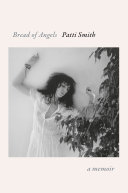
Image for "Bread of Angels"

Bread of Angels

A radiant new memoir from artist and writer Patti Smith, author of the National Book Award winner Just Kids

“God whispers through a crease in the wallpaper,” writes Patti Smith in this moving account of her life. A post–World War II childhood unfolds in a condemned housing complex where we enter the child’s world of the imagination. Smith, the captain of her loyal and beloved sibling army, vanquishes bullies, communes with the king of tortoises, and searches for sacred silver pennies.

The most intimate of Smith’s memoirs, Bread of Angels takes us through her teenage years where the first glimmers of art and romance take hold. Arthur Rimbaud and Bob Dylan emerge as creative role models as she begins to write poetry then lyrics, ultimately merging both into the songs of iconic recordings such as Horses, Wave, and Easter.

She leaves it all behind to marry her one true love, Fred Sonic Smith, with whom she creates a life of devotion and adventure on a canal in St. Clair Shores, Michigan. Here, she invents a room of her own, a low table, a Persian cup, inkwell and pen, entering at dawn to write. The couple spend nights in their landlocked Chris-Craft studying nautical maps and charting new adventures as they start a family.

A series of profound losses mark her life. Grief and gratitude are braided through years of caring for her children, rebuilding her life and, finally, writing again—the one constant in a life driven by artistic freedom and the power of the imagination to transform the commonplace into the magical, and pain into hope. In the final pages, we meet Smith on the road again, the vagabond who travels to commune with herself, who lives to write and writes to live.

Image for "Star of the Show"

Star of the Show

A stunning celebration of Dolly Parton’s iconic career as a performer, featuring entertaining personal stories alongside more than 500 full-color photographs, including exclusive images and ephemera from her archive, and an eight-page gatefold listing her lifetime of performances.

In Star of the Show, the culminating book in Dolly Parton’s photographic trilogy—following Songteller (lyrics) and Behind the Seams (fashion)—the global superstar finally shares a definitive look at her career as one of the world’s most dazzling and beloved performers.

Featuring engaging stories and memories from Parton’s dynamic life behind the microphone, this book spotlights her signature performances and star-making moments, from singing in front of her family to premiering on the Grand Ole Opry stage and beyond. Her formative years performing with country legend Porter Wagoner are chronicled as she learns hard lessons from life on the road. Breaking out on her own at state fairs and critically acclaimed venues, she toured the world performing for millions of fans in arenas, stadiums, and at festivals. From making her onscreen debut in the blockbuster feature film 9 to 5 to playing the Dallas Cowboys’ 2023 Thanksgiving halftime show to 42 million viewers, this global superstar knows no limits. Along the way, Dolly shares the stage with Kenny Rogers, Linda Ronstadt, Emmylou Harris, and others, while offering insight on touring big, singing strong, and staying on top for seven decades.

Brimming with Parton’s trademark wit and heartfelt sincerity, Star of the Show: My Life on Stage is not only an homage to one of history’s most cherished artists, but also a must-have collector’s item for—and love letter to—any fan of the one and only Dolly Parton.

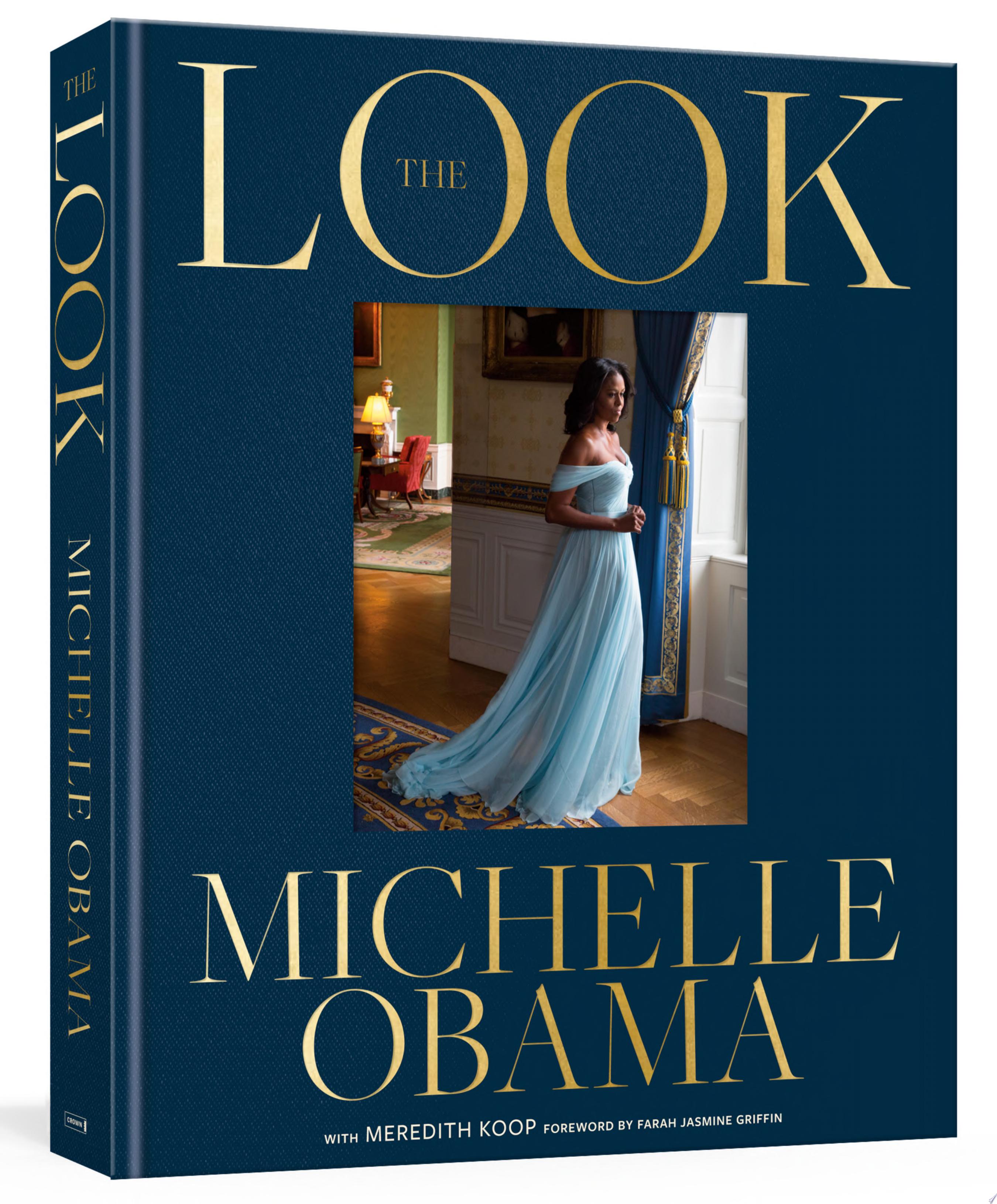
Image for "The Look"

The Look

Beautifully illustrated with more than 200 photographs, including never-before-seen images, The Look is a stunning journey through Michelle Obama’s style evolution, in her own words for the first time. 

In this celebration of style, from the moment she entered the public eye during her husband’s U.S. Senate campaign through her time as the first Black First Lady and today as one of this country’s most influential figures, Michelle Obama shares how she uses the beauty and intrigue of fashion to draw attention to her message. 

Featuring the voices of Meredith Koop, Obama’s trusted stylist, as well as her makeup artist Carl Ray, hairstylists Yene Damtew, Johnny Wright, and Njeri Radway, and many of the designers who have dressed Obama for notable events, The Look brings readers behind the scenes not only to reveal how her most memorable looks came together but also to tell a powerful story about how we present ourselves. 

Obama’s intimate and candid stories illuminate how her approach to dressing has evolved throughout her life—from the colorful sheath dresses, cardigans, and brooches she wore during her time as First Lady to the bold suits, denim, and braids of her post-White House life and all the active looks and beautiful gowns in between. 

In The Look, Michelle Obama explores the joy and the purpose of fashion and beauty and how—when wielded with grace and care—they can uplift and affirm the values one holds most dear. Confidence, she concludes, cannot be put on. But when you’re wearing something that’s intentional or beloved, clothing can make you feel like the best version of yourself.

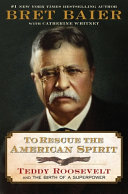
Image for "To Rescue the American Spirit"

To Rescue the American Spirit

From #1 New York Times bestselling author and Fox News Channel's Chief Political Anchor, a captivating biography of Teddy Roosevelt, whose bold leadership thrust America onto the world stage and changed the course of U.S. history.

There has never been a president like Theodore Roosevelt. An iconoclast shaped by fervent ideals, his early life seems ripped from the pages of an adventure novel: abandoning his place in the New York aristocracy, he was drawn to the thrill of the West, becoming an honorary cowboy who won the respect of the rough men of the plains, adopting their code of authenticity and courage. As a New York State legislator, he fought corruption and patronage. As New York City police commissioner, he walked the beat at night to hold his men accountable; and as New York governor, he butted heads with the old guard to bring fresh air to a state mired in political corruption. He was also a passionate naturalist, conservationist, and hunter who collected hundreds of specimens of birds and animals throughout his life. He was a soldier and commander who led a regiment of "Rough Riders" to victory in the Spanish-American War, a show of leadership and bravery that put him on the national map. As president, he brought energy, laughter, and bold ideas to the White House, pursuing a vigorous agenda that established America as a leader on the world stage --from advancing the Panama Canal, brokering peace with Russia, and taking on business elites.

Bret Baier's exquisite book reveals the storied life of a leader whose passion, daring, and prowess left an indelible mark on the fabric of our country and reimagined the possibilities of the presidency.

Image for "The Traitors Circle"

The Traitors Circle

"An astonishing true story of courage, love, and betrayal, told with the verve of a thriller. Freedland is a master at weaving spellbinding entertainments drawn from forgotten corners of history."--Mick Herron, bestselling author of Slow Horses

From the New York Times bestselling author of The Escape Artist, an extraordinary true story of resistance, heroism and betrayal.

When the whole world is lying, someone must tell the truth.

Berlin, 1943: A group of high society anti-Nazi dissenters meet for a tea party one late summer's afternoon. They do not know that, sitting around the table, is someone poised to betray them all to the Gestapo.

They form a circle of unlikely rebels, drawn from the German elite: two countesses, a diplomat, an intelligence officer, an ambassador's widow and a pioneering head mistress. What unites every one of them is a shared loathing of the Nazis, a refusal to bow to Hitler and the courage to perform perilous acts of resistance: meeting in the shadows, rescuing Jews or plotting for a future Germany freed from the Führer's rule. Or so they believe.

How did a group of brave, principled rebels, who had successfully defied Adolf Hitler for more than a decade, come to fall into such a lethal trap?

Undone from within and pursued to near-destruction by one of the Reich's cruelest men, they showed a heroism in the face of the most vengeful regime in history that raises the question: what kind of person does it take to risk everything and stand up to tyranny?

Image for "Writing Creativity and Soul"

Writing Creativity and Soul

From the bestselling author of The Secret Life of Bees and The Book of Longings: an intimate work on the mysteries, frustrations, and triumphs of being a writer, and an instructive guide to awakening the soul.

When Sue Monk Kidd was in high school, a home economics teacher wrote a list of potential occupations for women on the blackboard: teacher, nurse, librarian, secretary. “Writer” was nowhere to be found. On that day, Kidd shut the door on her writerly aspirations and would not revisit the topic until many years later when she announced to her husband and two children that she was going to become a writer. And so began her journey into the mysteries and methods of the writerly life…

In Writing Creativity and Soul, Sue Monk Kidd will pull from her own life and the lives of other writers—Virginia Woolf, Maya Angelou, Harper Lee, and many others—to provide a map for anyone who has ever felt lost as a writer. At the heart of this book is the unwavering belief that writing is a spiritual act, one that draws inspiration from the soul, that wellspring of creativity between imagination and feeling. Once you tap into that part of yourself, said Maya Angelou, there are only three more things you need as a writer: something to say, the ability to say it, and, perhaps most difficult of all, the courage to say it.

Equal parts memoir, guidebook, and spiritual quest, Writing Creativity and Soul is a pilgrimage and a touchstone, a journey into the transformational force of the imagination and the creative genius that lies in the unconscious.

Image for "Winston and the Windsors"

Winston and the Windsors

From the #1 New York Times bestselling author of The Queen and Diana, a groundbreaking story of the riveting hot-and-cold relationship between the House of Windsor and Winston Churchill.

From an early age, Winston Churchill was convinced that he was a man of destiny. Today, it seems his premonition was correct--few figures in British history have been so deeply and consequently involved with the British family as Churchill. While many people in positions of power have advised kings and queens during their reign, Churchill was unique in his role: helping to shape not only a reign, but an entire royal dynasty.

In Winston and the Windsors, Andrew Morton, one of the world's best-known biographers and a leading authority on celebrity, presents a meticulously researched joint biography of Winston Churchill and the House of Windsor. Throughout the course of his career and life, Churchill's connection to the Windsors fluctuated wildly. At times, he was the royal family's trusted confidant. At others, he was their leading antagonist. In exploring the complex dynamic between the two, Morton argues that, regardless of whether the attitudes of the royal family were warm or icy toward Churchill, their relationship was central to the twentieth-century history of the British monarchy.

From the Churchill family's intricate relationship with the Crown, to Winston's initially begrudging but ultimately fruitful partnership with George VI, to his enduring fondness for Queen Elizabeth II, this fascinating narrative biography sheds new light on the ways the Crown not only shaped Winston Churchill's career, but the ways in which Churchill shepherded the monarchy into the modern era.

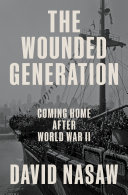
Image for "The Wounded Generation"

The Wounded Generation

From award-winning and bestselling author David Nasaw, a brilliant re-examination of post-World War II America that looks beyond the victory parades and into the veterans’—and nation’s—unhealed traumas

In its duration, geographical reach, and ferocity, World War II was unprecedented, and the effects on those who fought it and their loved ones at home, immeasurable. The heroism of the men and women who won the war may be well documented, but we know too little about the pain and hardships the veterans endured upon their return home. As historian David Nasaw makes evident in his masterful recontextualization of these years, the veterans who came home to America were not the same people as those who had left for war, and the nation to which they returned was not the one they had left behind. Contrary to the prevailing narratives of triumph, here are the largely unacknowledged realities the veterans—and the nation—faced that radically reshaped our understanding of this era as a bridge to today.

The Wounded Generation tells the indelible stories of the veterans and their loved ones as they confronted the aftershocks of World War II. Veterans suffering from recurring nightmares, uncontrollable rages, and social isolation were treated by doctors who had little understanding of PTSD. They were told that they were suffering from nothing more than battle fatigue and that time would cure it. When their symptoms persisted, they were given electro-shock treatments and lobotomies, while the true cause of their distress would remain undiagnosed for decades to come. Women who had begun working outside the home were pressured to revert to their prewar status as housewives dependent on their husbands. Returning veterans and their families were forced to double up with their parents or squeeze into overcrowded, substandard shelters as the country wrestled with a housing crisis. Divorce rates doubled. Alcoholism was rampant. Racial tensions heightened as White southerners resorted to violence to sustain the racial status quo. To ease the veterans’ readjustment to civilian life, Congress passed the GI Bill, but Black veterans were disproportionately denied their benefits, and the consequences of this discrimination would endure long after the war was won.

In this richly textured examination, Nasaw presents a complicated portrait of those who brought the war home with them, among whom were the period’s most influential political and cultural leaders, including John F. Kennedy, Robert Dole, and Henry Kissinger; J. D. Salinger and Kurt Vonnegut; Harry Belafonte and Jimmy Stewart. Drawing from veterans’ memoirs, oral histories, and government documents, Nasaw illuminates a hidden chapter of American history—one of trauma, resilience, and a country in transition.

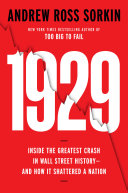
Image for "1929"

1929

Named a Most Anticipated Book by New York Times Books Review, TIME, Washington Post, Associated Press, Town & Country, New York Post, and more

From the bestselling author of Too Big to Fail, “the definitive history of the 2008 banking crisis,”* comes a spellbinding narrative of the most infamous stock market crash in history. With the depth of a classic history and the drama of a thriller, 1929 unravels the greed, blind optimism, and human folly that led to an era-defining collapse—one with ripple effects that still shape our society today.

In 1929, the world watched in shock as the unstoppable Wall Street bull market went into a freefall, wiping out fortunes and igniting a depression that would reshape a generation. But behind the flashing ticker tapes and panicked traders, another drama unfolded—one of visionaries and fraudsters, titans and dreamers, euphoria and ruin.

With unparalleled access to historical records and newly uncovered documents, New York Times bestselling author Andrew Ross Sorkin takes readers inside the chaos of the crash, behind the scenes of a raging battle between Wall Street and Washington and the larger-than-life characters whose ambition and naivete in an endless boom led to disaster. The dizzying highs and brutal lows of this era eerily mirror today’s world—where markets soar, political tensions mount, and the fight over financial influence plays out once again.

This is not just a story about money. 1929 is a tale of power, psychology, and the seductive illusion that “this time is different.” It’s about disregarded alarm bells, financiers who fell from grace, and skeptics who saw the crash coming—only to be dismissed until it was too late.

Hailed as a landmark book, Too Big to Fail reimagined how financial crises are told. Now, with 1929, Sorkin delivers an immersive, electrifying account of the most pivotal market collapse of all time—with lessons that remain as urgent as ever. More than just a history, 1929 is a crucial blueprint for understanding the cycles of speculation, the forces that drive financial upheaval, and the warning signs we ignore at our peril.

*The Atlantic Monthly

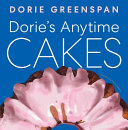
Image for "Dorie's Anytime Cakes"

Dorie's Anytime Cakes

From beloved James Beard Award-winning and New York Times bestselling author Dorie Greenspan--a vibrantly illustrated collection of recipes for simple yet most-memorable cakes

Over the years, Dorie has created thousands of excellent recipes. And out of all of them, the ones she always comes back to are the simplest cakes. Some may have a dusting of powdered sugar or a drizzle of icing, but most of them are straight-from-the-oven cakes that are great as-is. They're cakes that you probably already have all the ingredients for in your pantry. They're the kinds of cakes you can whip up, put out and know that anyone with a hankering can come by and cut a sliver or a hunk. Any time.

With evocative writing, expert advice, and gorgeous illustrations by Nancy Pappas, Dorie's Anytime Cakes celebrates the simple--but still exciting and special--with more than 100 recipes for easy-to-make, easy-to-love cakes.

There are recipes for all kinds of cakes, including loaves and rounds, muffins, crumbles, and Bundts--even savory cakes--plus frostings, fillings, and other flourishes:

  • BFF Brownie Cake
  • Morning, Noon, and Night Thanksgiving Cake
  • Cafuné Corn Cake
  • Simplest, Plainest, Most Old-Fashion--Also Best Tasting--Marble Cake
  • Buttermilk Plum Cake
  • Faux-caccia Squares
  • Miso-Cheddar Scone Cake
  • Feta, Sumac, and Za'atar Loaf
  • The Devil's Chocolate Cake

You'll also find "Playing Around" suggestions throughout--Dorie's inspirations for making each recipe to your own taste and right for all occasions. Flavor your sugar with citrus or tea for a special touch, spice your cake up with hot honey, or transform your plain cake into an impressive, layered party cake. Just like Dorie, you'll return to baking these favorite cakes again and again.

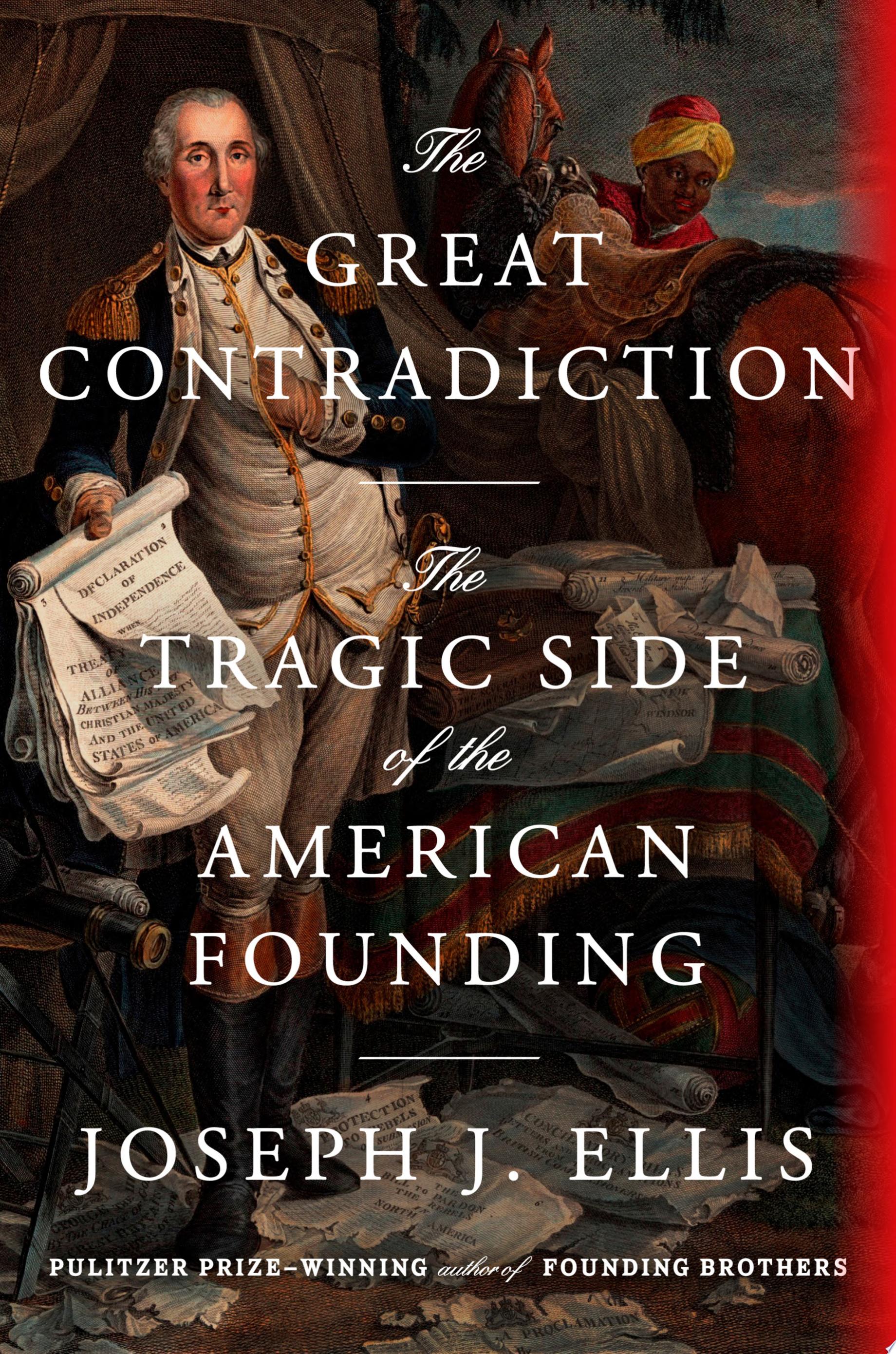
Image for "The Great Contradiction"

The Great Contradiction

A major new history from our most trusted voice on the Revolutionary era, the author of the Pulitzer Prize–winning Founding Brothers and the National Book Award winner American Sphinx, and featured in THE AMERICAN REVOLUTION, a film by Ken Burns, Sarah Botstein, and David Schmidt, on PBS.

An astounding look at how America’s founders—Washington, Jefferson, Franklin, Madison, Adams—regarded the issue of slavery as they drafted the Declaration of Independence and the Constitution. A daring and important work that ultimately reckons with the two great failures of America’s founding: the failure to end slavery and the failure to avoid Indian removal.

On the eve of the American Revolution, half a million enslaved African Americans were embedded in the North American population. The slave trade was flourishing, even as the thirteen colonies armed themselves to defend against the idea of being governed without consent. This paradox gave birth to what one of our most admired historians, Joseph J. Ellis, calls the “great contradiction”: How could a government that had been justified and founded on the principles articulated in the Declaration of Independence institutionalize slavery? How could it permit a tidal wave of western migration by settlers who understood the phrase “pursuit of happiness” to mean the pursuit of Indian lands?

With narrative grace and a flair for irony and paradox, Ellis addresses the questions that lie at America’s twisted roots—questions that turned even the sharpest minds of the Revolutionary generation into mental contortionists. He discusses the first debates around slavery and the treatment of Native Americans, from the Constitutional Convention to the Treaty of New York, revealing the thinking and rationalizations behind Jay, Hamilton, and Madison’s revisions of the Articles of Confederation, and highlights the key role of figures like Quaker abolitionist Anthony Benezet and Creek chief Alexander McGillivray.

Ellis writes with candor and deftness, his clarion voice rising above presentist historians and partisans who are eager to make the founders into trophies in the ongoing culture wars. Instead, Ellis tells a story that is rooted in the coexistence of grandeur and failure, brilliance and blindness, grace and sin.

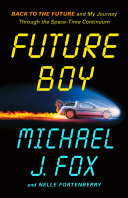
Image for "Future Boy"

Future Boy

A poignant, heartfelt, and funny memoir about how, in 1985, Michael J. Fox brought to life two iconic roles simultaneously—Alex P. Keaton in Family Ties and Marty McFly in Back to the Future. An amazing true story as only Michael J. Fox can tell it

In early 1985, Michael J. Fox was one of the biggest stars on television. His world was about to get even bigger, but only if he could survive the kind of double duty unheard of in Hollywood. Fox’s days were already dedicated to rehearsing and taping the hit sitcom Family Ties, but then the chance of a lifetime came his way. Soon, he committed his nights to a new time-travel adventure film being directed by Robert Zemeckis and produced by Steven Spielberg—Back to the Future. Sitcom during the day, movie at night—day after day, for months.

Fox’s nightly commute from a soundstage at Paramount to the back lot at Universal Studios, from one dream job to another, would become his own space-time continuum. It was in this time portal that Alex P. Keaton handed the baton to Marty McFly while Michael J. Fox tried to catch a few minutes of sleep. Alex’s bravado, Marty’s flair, and Fox’s comedic virtuosity all swirled together to create something truly special.

In Future Boy, Fox tells the remarkable story of playing two landmark roles at the same time—a slice of entertainment history that’s never been told. Using new interviews with the cast and crew of both projects, the result is a vividly drawn and eye-opening story of creative achievement by a beloved icon.

Image for "Cancer Is Complicated"

Cancer Is Complicated

"Clea has always been a helper, and she’s doing it again with this incredible book. She is sharing her cancer journey and helping you through yours. She will walk with you . . . holding your hand every step of the way." —Hoda Kotb

A comforting, empowering, practical, and beautifully written guide to living with breast cancer from Clea Shearer, cofounder of The Home Edit

In 2022, Clea Shearer thought: This is going to be the best year of my life. The Home Edit, the company she had cofounded and worked so hard to grow, was acquired by Hello Sunshine. She had just finished filming the second season of her Emmy-nominated show Get Organized with The Home Edit. She turned forty surrounded by candles, flowers, friends, and family. And then, on March 8, 2022, she was diagnosed with breast cancer. Her life as she knew it was over.

But life is full of nuances. As the months went by, Clea started to feel like she had been given an opportunity. What if she could share everything she experienced and learned throughout this process, so it would be a little less frightening for someone else? If she could manage to do that, maybe she could turn her cancer purposeful.

Cancer Is Complicated is the book that Clea wishes she’d had when she started on her cancer journey. It is a memoir and a guidebook, blending Clea’s experiences and all the wisdom and advice she’s gathered through this process. The book follows Clea through every step of her journey, from the moment she first felt a lump in her breast, through treatment, to where she is today. Clea also offers insights on questions big and small—from how to be your own biggest advocate, to knowing whom in your circle to share your diagnosis with, to understanding the emotional side of cancer, to what to bring with you to chemo, to things to eat when nothing else tastes good, and so much more.

Clea has built an incredibly successful career on empowering and helping people navigate the overwhelm of their homes—offering accessible ways for us to begin to put our lives in order. Here, she applies her wisdom to one of the most overwhelming and frightening experiences any human being ever has to face: cancer and illness.

Warm, honest, and straightforward in its approach, Cancer Is Complicated is for anyone with cancer or anyone who loves someone with cancer. It is a reminder to care for ourselves and one another, and it is here to help readers feel less alone and more prepared for the journey ahead.

Image for "When Everyone Knows That Everyone Knows . . ."

When Everyone Knows That Everyone Knows . . .

From one of the world’s most celebrated intellectuals, a brilliantly insightful work that explains how we think about each other’s thoughts about each other’s thoughts, ad infinitum. It sounds impossible, but Steven Pinker shows that we do it all the time. This awareness, which we experience as something that is public or “out there,” is called common knowledge, and it has a momentous impact on our social, political, and economic lives.

Common knowledge is necessary for coordination, for making arbitrary but complementary choices like driving on the right, using paper currency, and coalescing behind a political leader or movement. It’s also necessary for social coordination: everything from rendezvousing at a time and place to speaking the same language to forming enduring relationships of friendship, romance, or authority. Humans have a sixth sense for common knowledge, and we create it with signals like laughter, tears, blushing, eye contact, and blunt speech.

But people also go to great lengths to avoid common knowledge—to ensure that even if everyone knows something, they can’t know that everyone else knows they know it. And so we get rituals like benign hypocrisy, veiled bribes and threats, sexual innuendo, and pretending not to see the elephant in the room.

Pinker shows how the hidden logic of common knowledge can make sense of many of life’s enigmas: financial bubbles and crashes, revolutions that come out of nowhere, the posturing and pretense of diplomacy, the eruption of social media shaming mobs and academic cancel culture, the awkwardness of a first date. Artists and humorists have long mined the intrigues of common knowledge, and Pinker liberally uses their novels, jokes, cartoons, films, and sitcom dialogues to illuminate social life’s tragedies and comedies. Along the way he answers questions like:
 

  • Why do people hoard toilet paper at the first sign of an emergency?
  • Why are Super Bowl ads filled with ads for crypto?
  • Why, in American presidential primary voting, do citizens typically select the candidate they believe is preferred by others rather than their favorite?
  • Why did Russian authorities arrest a protester who carried a blank sign?
  • Why is it so hard for nervous lovers to say goodbye at the end of a phone call?
  • Why does everyone agree that if we were completely honest all the time, life would be unbearable?


Consistently riveting in explaining the paradoxes of human behavior, When Everyone Knows That Everyone Knows… invites us to understand the ways we try to get into each other’s heads and the harmonies, hypocrisies, and outrages that result.

Image for "We the People"

We the People

The U.S. Constitution is among the oldest constitutions in the world but also one of the most difficult to amend. Jill Lepore, Harvard professor of history and law, explains why in We the People, the most original history of the Constitution in decades--and an essential companion to her landmark history of the United States, These Truths.


Published on the occasion of the 250th anniversary of the nation's founding--the anniversary, too, of the first state constitutions--We the People offers a wholly new history of the Constitution. "One of the Constitution's founding purposes was to prevent change," Lepore writes. "Another was to allow for change without violence." Relying on the extraordinary database she has assembled at the Amendments Project, Lepore recounts centuries of attempts, mostly by ordinary Americans, to realize the promise of the Constitution. Yet nearly all those efforts have failed. Although nearly twelve thousand amendments have been introduced in Congress since 1789, and thousands more have been proposed outside its doors, only twenty-seven have ever been ratified. More troubling, the Constitution has not been meaningfully amended since 1971. Without recourse to amendment, she argues, the risk of political violence rises. So does the risk of constitutional change by presidential or judicial fiat.


Challenging both the Supreme Court's monopoly on constitutional interpretation and the flawed theory of "originalism," Lepore contends in this "gripping and unfamiliar story of our own past" that the philosophy of amendment is foundational to American constitutionalism. The framers never intended for the Constitution to be preserved, like a butterfly, under glass, Lepore argues, but expected that future generations would be forever tinkering with it, hoping to mend America by amending its Constitution through an orderly deliberative and democratic process.


Lepore's remarkable history seeks, too, to rekindle a sense of constitutional possibility. Congressman Jamie Raskin writes that Lepore "has thrown us a lifeline, a way of seeing the Constitution neither as an authoritarian straitjacket nor a foolproof magic amulet but as the arena of fierce, logical, passionate, and often deadly struggle for a more perfect union." At a time when the Constitution's vulnerability is all too evident, and the risk of political violence all too real, We the People, with its shimmering prose and pioneering research, hints at the prospects for a better constitutional future, an amended America.


Image for "Replaceable You"

Replaceable You

The body is the most complex machine in the world, and the only one for which you cannot get a replacement part from the manufacturer. For centuries, medicine has reached for what's available--sculpting noses from brass, borrowing skin from frogs and hearts from pigs, crafting eye parts from jet canopies and breasts from petroleum by-products. Today we're attempting to grow body parts from scratch using stem cells and 3D printers. How are we doing? Are we there yet?

In Replaceable You, Mary Roach explores the remarkable advances and difficult questions prompted by the human body's failings. When and how does a person decide they'd be better off with a prosthetic than their existing limb? Can a donated heart be made to beat forever? Can an intestine provide a workable substitute for a vagina?

Roach dives in with her characteristic verve and infectious wit. Her travels take her to the OR at a legendary burn unit in Boston, a "superclean" xeno-pigsty in China, and a stem cell "hair nursery" in the San Diego tech hub. She talks with researchers and surgeons, amputees and ostomates, printers of kidneys and designers of wearable organs. She spends time in a working iron lung from the 1950s, stays up all night with recovery techs as they disassemble and reassemble a tissue donor, and travels across Mongolia with the cataract surgeons of Orbis International.

Irrepressible and accessible, Replaceable You immerses readers in the wondrous, improbable, and surreal quest to build a new you.

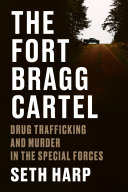
Image for "The Fort Bragg Cartel"

The Fort Bragg Cartel

“The Fort Bragg Cartel opens like a nonfiction thriller and never lets up. A page-turning investigation into the dark side of our forever wars.”
—Steve Coll, Pulitzer Prize-winning author of Ghost Wars and Directorate S

A groundbreaking investigation into a string of unsolved murders at America’s premier special operations base, and what the crimes reveal about drug trafficking and impunity among elite soldiers in today’s military

In December 2020, a deer hunter discovered two dead bodies that had been riddled with bullets and dumped in a forested corner of Fort Bragg, North Carolina. One of the dead men, Master Sergeant William “Billy” Lavigne, was a member of Delta Force, the most secretive “black ops” unit in the military. A deeply traumatized veteran of America’s classified assassination program, Lavigne had done more than a dozen deployments in his lengthy career, was addicted to crack cocaine, dealt drugs on base, and had committed a series of violent crimes before he was mysteriously killed. The other victim, Chief Warrant Officer Timothy Dumas, was a quartermaster attached to the Special Forces who used his proximity to clandestine missions to steal guns and traffic drugs into the United States from abroad, and had written a blackmail letter threatening to expose criminality in the special operations task force in Afghanistan.

As soon as Seth Harp, an Iraq war veteran and investigative reporter, begins looking into the double murder, he learns that there have been many more unexplained deaths at Fort Bragg recently, other murders connected to drug trafficking in elite units, and dozens of fatal overdoses. Drawing on declassified documents, trial transcripts, police records, and hundreds of interviews, Harp tells a scathing story of narco-trafficking in the Special Forces, drug conspiracies abetted by corrupt police, blatant military cover-ups, American complicity in the Afghan heroin trade, and the pernicious consequences of continuous war.

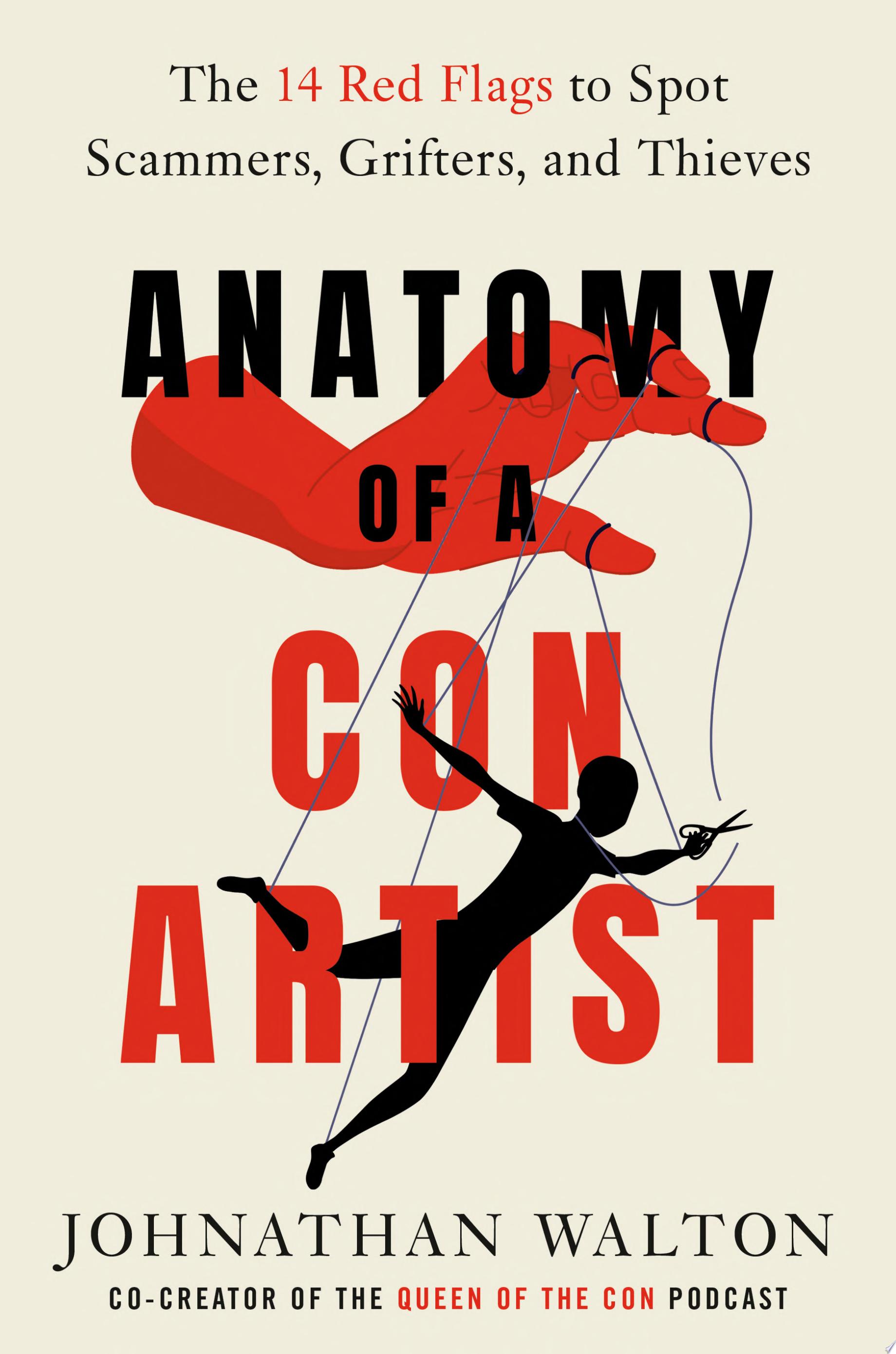
Image for "Anatomy of a Con Artist"

Anatomy of a Con Artist

These are the 14 red flags to identify the scammer in your life before they con you—from a victim-turned-vigilante and host of the hit podcast Queen of the Con.

“Johnathan Walton has written a master class on how to spot scammers, con artists, grifters, and thieves. And his storytelling reads like a crime novel. . . . A must-read.”—Joe Navarro, FBI special agent (ret.) and author of the international bestseller Dangerous Personalities

“Some people play golf on the weekends,” Johnathan Walton says. “I hunt con artists.”

Con artists are everywhere—your new boyfriend or girlfriend, your new neighbor or coworker, your new friend—and they don’t outsmart you; they out-feel you to get their hands on your money. In Anatomy of a Con Artist, Walton lays out “the tells” based on hundreds of real-life cases he’s investigated, including:

Red Flag #1—A Stranger Offering Help: Someone new and overly helpful insinuates themselves into your life.

Red Flag #3—Drama, Drama, Drama: Constant dramatic “emergencies” to pull you in.

Red Flag #8—Beak Wetting: Faux generosity—gifts, money, or favors to bring your guard down.

After being scammed out of nearly $100,000 by a devious con artist, Walton was turned away by police. Infuriated and armed with the investigative skills he’d gained from years as a TV reporter, Walton launched his own investigation and built a compelling criminal case authorities could not ignore. Walton got his con artist charged, prosecuted, and convicted, then devoted his life to helping other victims do the same. This book packs in all he has learned. 

Some con artists scheme for money, some for attention, some just for the thrill of lying. And if you think it can’t happen to you, then you are exactly the kind of “mark” a professional con artist is looking for. With this insightful guide in your hands, you are far less likely to get conned and far more likely to spot these nefarious manipulators from a mile away—and cross the street when you see them coming.

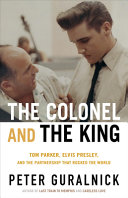
Image for "The Colonel and the King"

The Colonel and the King

From the award-winning biographer of Elvis Presley, a groundbreaking dual portrait of the relationship between the iconic artist and his legendary manager--drawing on a wealth of the Colonel's never-before-seen correspondence to reveal that this oft-reviled figure was in fact a confidant, friend, and architect of his client's success


In early 1955, Colonel Tom Parker--manager of the number-one country music star of the day--heard that an unknown teenager from Memphis had just drawn a crowd of more than eight hundred people to a Texas schoolhouse, and headed south to investigate. Within days, Parker was sending out telegrams and letters to promoters and booking agents: "We have a new boy that is absolutely going to be one of the biggest things in the business in a very short time. His name is ELVIS PRESLEY." Later that year, after signing with RCA, the young man sent a telegram of his own: "Dear Colonel, Words can never tell you how my folks and I appreciate what you did for me.... I love you like a father."


The close personal bond between Elvis and the Colonel has never been fully portrayed before. It was a relationship founded on mutual admiration and support. From the outset, the Colonel defended Elvis fiercely and indefatigably against RCA executives, Elvis's own booking agents, and movie moguls. But in their final years together, the story grew darker, as the Colonel found himself unable to protect Elvis from himself or control growing problems of his own.


Featuring troves of previously unpublished correspondence, revelatory for both its insights and emotional depth, The Colonel and the King provides a unique perspective on not one but two American originals. A tale of the birth of the modern-day superstar (an invention almost entirely of Parker's making) by Peter Guralnick, the most acclaimed music writer of his generation, it presents these two misunderstood icons as they've never been seen before: with all of their brilliance, humor, and flaws on full display.

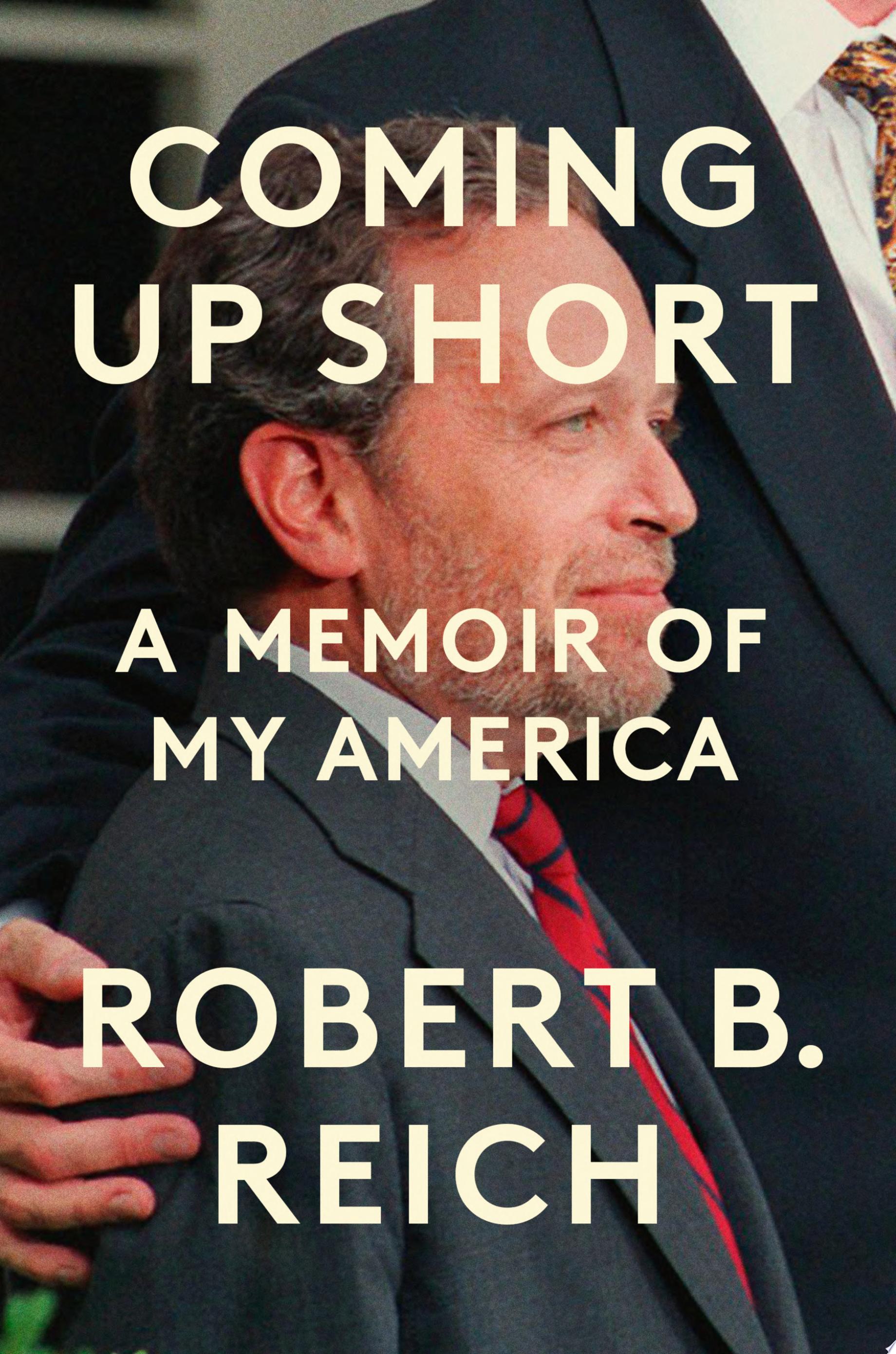
Image for "Coming Up Short"

Coming Up Short

From political economist, cabinet member, beloved professor, media presence, and bestselling author of Saving Capitalism and The Common Good, a deeply felt, compelling memoir of growing up in a baby-boom America that made progress in certain areas, fell short in so many important ways, and still has lots of work to do

"Important and galvanizing.” —Senator Bernie Sanders

"Essential reading for understanding this moment in American history.” —Molly Jong-Fast, New York Times bestselling author of How to Lose Your Mother

A thought-provoking, principled, clear-eyed chronicle of the culture, politics, and economic choices that have landed us where we are today—with irresponsible economic bullies and corporations with immense wealth and lobbying power on top, demagogues on the rise, and increasing inequality fueling anger and hatred across the country.

Nine months after World War II, Robert Reich was born into a united America with a bright future—which went unrealized for so many as big money took over our democracy. His encounter with school bullies on account of his height—4'11" as an adult—set him on a determined path to spend his life fighting American bullies of every sort. He recounts the death of a friend in the civil rights movement; his political coming of age witnessing the Berkeley free speech movement; working for Bobby Kennedy and Senator Eugene McCarthy; experiencing a country torn apart by the Vietnam War; meeting Hillary Rodham in college, Bill Clinton at Oxford, and Clarence Thomas at Yale Law. He details his friendship with John Kenneth Galbraith during his time teaching at Harvard, and subsequent friendships with Bernie Sanders and Ted Kennedy; and his efforts as labor secretary for Clinton and economic advisor to Barack Obama. Ultimately, Reich asks: What did his generation accomplish? Did they make America better, more inclusive, more tolerant? Did they strengthen democracy? Or did they come up short?

Reich hardly abandons us to despair over a doomed democracy. With characteristic spirit and humor, he lays out how we can reclaim a sense of community and a democratic capitalism based on the American ideals we still have the power to salvage.

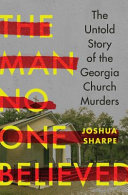
Image for "The Man No One Believed"

The Man No One Believed

In 1985, a white man walked into a South Georgia church and brutally murdered Harold and Thelma Swain, two pillars of the area's Black community. The killer vanished into the night. For fifteen years, the case remained unsolved. Then authorities zeroed in on Dennis Perry, a carpenter who grew up nearby. Convicted with devastatingly flawed evidence, Perry received a double life sentence.

When award-winning journalist and South Georgia native Joshua Sharpe retraces the case, he discovers a winding path of corruption, devastating missteps, and secrets. Driven by the pursuit of the truth, Sharpe's investigation takes him through dusty courthouse archives, down winding dirt roads, and into intense interviews. But he keeps knocking on doors--even after they're slammed in his face. Sharpe uncovers explosive evidence that helps prove Dennis Perry's innocence. And he confronts a long-ignored suspect: an alleged white supremacist who had bragged about committing the murders.

But the fight for the truth is not easily won. When a key figure in the investigation turns up dead under suspicious circumstances, Sharpe's sources and editors insist that he could be in danger. And even as evidence mounts of Perry's innocence, local officials work to keep him in prison--until Sharpe's reporting forces the state to launch a new investigation--thirty-five years after the Swains' murders. Driven by Sharpe's tireless reporting, The Man No One Believed tells the unbelievable story of one of the most confounding cases in Georgia history, the extraordinary fight to free an innocent man, and how state officials worked against the odds to deliver justice for the Swains after all.

Both a riveting true crime story and a searing indictment of American injustice, The Man No One Believed is a gripping work of literary journalism--a moving examination of how we reckon with the sins of our past.

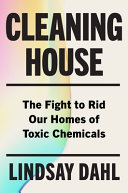
Image for "Cleaning House"

Cleaning House

From the front lines of the movement for safer products, environmental health expert Lindsay Dahl takes us on her journey from skeptic to activist, exposing the secret forces that keep toxic chemicals in our homes, bodies, and environment--showing us how to fight back and keep our families safe.

In Cleaning House, Lindsay Dahl shows how seemingly innocuous items--everything from toys to common beauty and cleaning products--can include toxic chemicals, thanks to a consistent failure of regulation in the United States. The scientific research linking toxic chemicals in products to rising rates of cancer and reproductive harms is as strong as the science that led to banning lead from gasoline, PBCs, and DDT. But with varying degrees of protective guardrails in place for the everyday items, consumers are tasked with playing toxic-chemical detective and those unable to afford safer products are left hanging in the balance. Through vivid storytelling and robust scientific evidence, Dahl makes a compelling case that a safer world will only arrive through systemic change. We must turn off the tap of toxic chemicals before they make their way into our homes and bodies--and here she shows you how.

Drawing on Dahl's extensive experience as a lobbyist, product formulator, and a parent, she unravels the shocking web of political and cultural factors that landed us here and are key to solving this massive public health crisis. Dahl takes readers behind the scenes as a young but determined lobbyist fighting powerful chemical industry players, which she discovered are replicating Big Tobacco's disinformation playbook by downplaying the harms of the toxic chemicals they continue to profit from. And she introduces readers to the brilliant scientists doing ground-breaking research, legislators passing life-saving laws, forward-thinking business leaders, communities facing the highest level of exposure to toxic chemical pollution, and parents from all political stripes who have joined the fight for a safer world.

Told through a compelling David and Goliath narrative, Cleaning House dares to take a pragmatic and science-based approach to the concept of clean living, in a time where the wellness movement is threatened by partisan politics and misinformation. It is an essential read for anyone who wants a safer home and a safer future for our children.

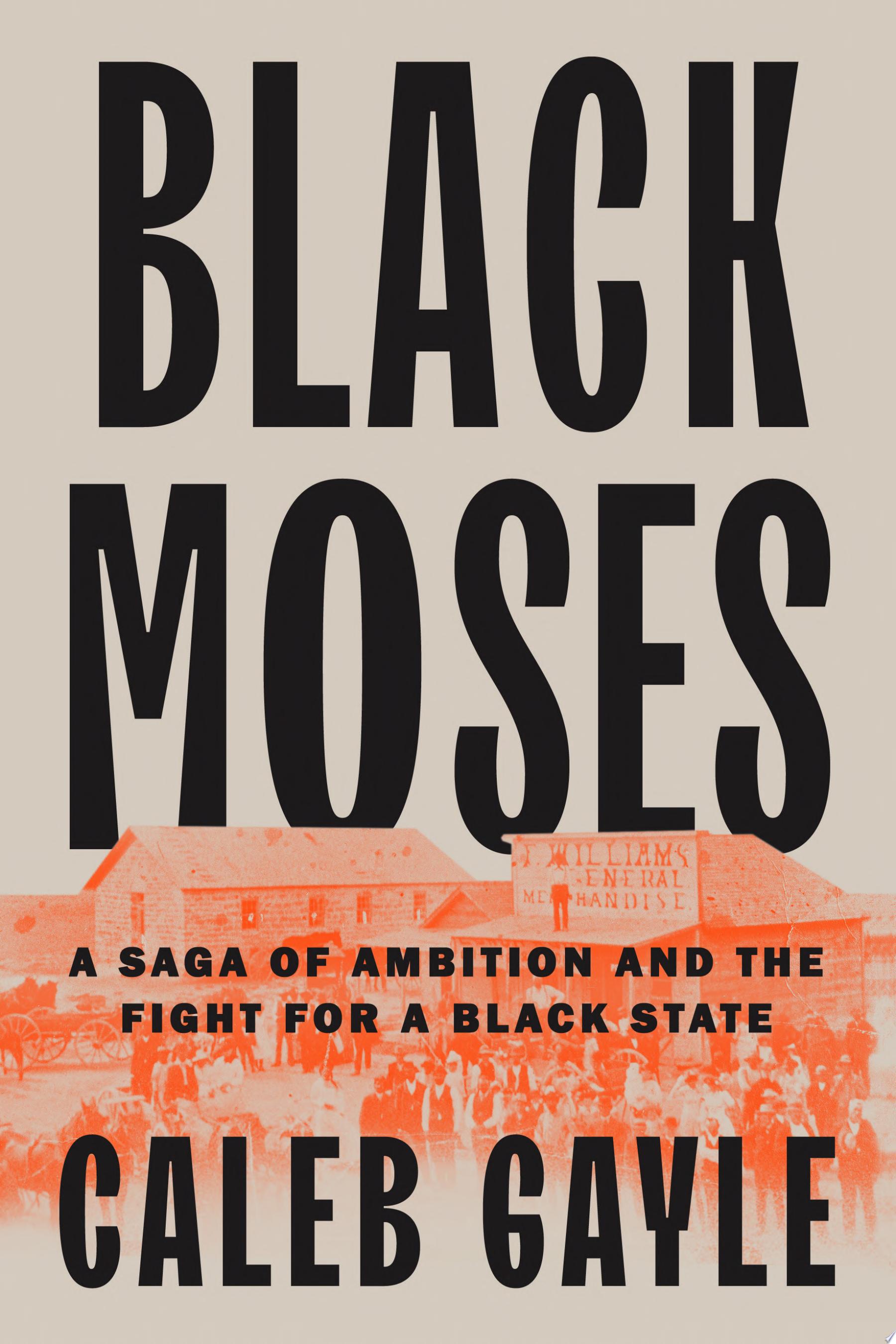
Image for "Black Moses"

Black Moses

The remarkable story of Edward McCabe, a Black man who tried to establish a Black state within the United States.

In this paradigm-shattering work of American history, Caleb Gayle recounts the extraordinary tale of Edward McCabe, a Black man who championed the audacious idea to create a state within the Union governed by and for Black people — and the racism, politics, and greed that thwarted him.
 
As the sweeping changes and brief glimpses of hope brought by the Civil War and Reconstruction began to wither, anger at the opportunities available to newly freed Black people were on the rise. As a result, both Blacks and whites searched for new places to settle. That was when Edward McCabe, a Black businessman and a rising political star in the American West, set in motion his plans to found a state within the Union for Black people to live in and govern. His chosen site: Oklahoma, a place that the U.S. government had deeded to Indigenous people in the 1830s when it forced thousands of them to leave their homes under Indian Removal, which became known as the Trail of Tears.
 
McCabe lobbied politicians in Washington, D.C., Kansas, and elsewhere as he exhorted Black people to move to Oklahoma to achieve their dreams of self-determination and land ownership. His rising profile as a leader and spokesman for Black people as well as his willingness to confront white politicians led him to become known as Black Moses. And like his biblical counterpart, McCabe nearly made it to the promised land but was ultimately foiled by politics, business interests, and the growing ambitions of white settlers who also wanted the land.
 
In Black Moses, Gayle brings to vivid life the world of Edward McCabe: the Black people who believed in his dream of a Black state, the white politicians who didn't, and the larger challenges of confronting the racism and exclusion that bedeviled Black people's attempts to carve a place in America for themselves. Gayle draws from extraordinary research and reporting to reveal an America that almost was.

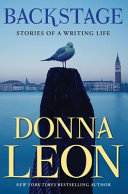
Image for "Backstage"

Backstage

A memorable collection of stories and essays on writing, reading, teaching, and Venice by the celebrated author of the bestselling Guido Brunetti series

Donna Leon's memoir, Wandering through Life, gave her legions of fans a colorful tour through her life, from childhood in New Jersey to adventures in China and Iran, to her love of Venice and opera. Nowhere, however, did she discuss her writing life.

In Backstage, Donna reveals her admiration for, and inspiration from, the great crime novelists Ruth Rendell and Ross Macdonald, examining their approach to storytelling as she dissects her favorite books of theirs. She expresses her love for Charles Dickens's Great Expectations and her appreciation for Sir Walter Scott's generosity of spirit. And she chronicles the amount of research she undertakes to be able to present authentically, through Guido Brunetti and his colleagues, places and characters far from her own experience--from interviewing a diamond dealer in Venice to open up the world of blood diamonds, to meeting, through back channels, a courageous sex worker and women's rights activist to depict accurately the trafficking of women in Italy. By contrast, the idea and opening scene of one of her novels came to her as she was walking through Venice.

Venice is central in her memory, whether recounting the semi-comic irritation of a noisy elderly neighbor or the origins of the city's Carnevale. Her teaching career yields memorable tales: helping a young Black boy in a Newark, New Jersey, elementary school; instructing young Iranian pilots in English just before the 1979 Iranian Revolution; and taking her students at a Swiss private high school to the famous Frank Zappa concert in Montreux interrupted by fire.

Throughout, she is as good a storyteller about herself as she is a chronicler of Guido Brunetti's crime adventures. Readers will be as caught up in her world as she is in his.

Image for "Are You Mad at Me?"

Are You Mad at Me?

From psychotherapist and social media star Meg Josephson, a groundbreaking “cure for chronic people-pleasing” (Adam Grant, #1 New York Times bestselling author) that explores the common survival instinct called fawning and offers “explanations, comfort, and best of all, solutions” (Christie Tate, New York Times bestselling author).

Are you...

- Constantly worried about what people think of you, if they like you, if they’re mad at you?
- The eldest daughter and/or the angry daughter?
- Anxious, a perfectionist, or an overachiever?
- Always overextending yourself (and then resentful)?
- Someone who avoids conflict at all costs?
- Fearful of getting into trouble or being seen as “bad”?
- Silencing your needs for the comfort and happiness of everyone else?
- Prone to overexplain or over apologize?
- Eternally obsessing over why someone texted with a period instead of an exclamation point?

Psychotherapist Meg Josephson is here to show you that people-pleasing is not a personality trait. It’s a common survival mechanism known as “fawning”: an instinct often learned in childhood to become more appealing to a perceived threat in order to feel safe. Yet many people are stuck in this way of being for their whole lives. Are You Mad at Me? weaves Josephson’s own moving story with that of fascinating client stories and thought-provoking exercises to show you how to:

- Identify all the roles you might play—from peacekeeper to performer to caretaker to lone wolf to perfectionist to chameleon—that keep you far from yourself.
- Stop fearing your thoughts and emotions, even if they’re unpleasant.
- Rethink conflict and boundaries as an opening for deeper connection.
- Practice “leaning back” in relationships.
- Recognize when people-pleasing is actually necessary (with your chaotic boss) and when it’s not (with your close friends) and stop self-loathing when you slip into old patterns.
- Shift away from the familiar chaos, anxiety, and resentment you’re used to as you move closer to yourself and a life that no longer depletes you—but brings you joy.

With Josephson’s “lucid prose and smart mix of clinical expertise, personal disclosure, and pertinent case studies” (Publishers Weekly), Are You Mad at Me? will help you shed the behaviors that are keeping you stuck in the past so that you can live in your most authentic present.

Image for "Dinner with King Tut"

Dinner with King Tut

New York Times's 21 Nonfiction Books Coming This Summer Boston Globe's Best Summer 2025 Books

From "one of America's smartest and most charming writers" (NPR), an archaeological romp through the entire history of humankind--and through all five senses--from tropical Polynesian islands to forbidding arctic ice floes, and everywhere in between.

Whether it's the mighty pyramids of Egypt or the majestic temples of Mexico, we have a good idea of what the past looked like. But what about our other senses: The tang of Roman fish sauce and the springy crust of Egyptian sourdough? The boom of medieval cannons and the clash of Viking swords? The frenzied plays of an Aztec ballgame...and the chilling reality that the losers might also lose their lives?

History often neglects the tastes, textures, sounds, and smells that were an intimate part of our ancestors' lives, but a new generation of researchers is resurrecting those hidden details, pioneering an exciting new discipline called experimental archaeology. These are scientists gone rogue: They make human mummies. They investigate the unsolved murders of ancient bog bodies. They carve primitive spears and go hunting, then knap their own obsidian blades to skin the game. They build perilous boats and plunge out onto the open sea--all in the name of experiencing history as it was, with all its dangers, disappointments, and unexpected delights.

Beloved author Sam Kean joins these experimental archaeologists on their adventures across the globe, from the Andes to the South Seas. He fires medieval catapults, tries his hand at ancient surgery and tattooing, builds Roman-style roads--and, in novelistic interludes, spins gripping tales about the lives of our ancestors with vivid imagination and his signature meticulous research.

Lively, offbeat, and filled with stunning revelations about our past, Dinner with King Tut sheds light on days long gone and the intrepid experts resurrecting them today, with startling, lifelike detail and more than a few laughs along the way.

Image for "2024"

2024

In 2024, award-winning reporters Josh Dawsey, Tyler Pager, and Isaac Arnsdorf bring us the definitive, inside story of the most tumultuous and consequential presidential campaign in our history.

"A well-paced, thorough and often (darkly) humorous account of the two-year campaign season that began when Donald Trump announced he was running for president again . . . Plenty of thrilling fly-on-the-wall moments." —The New York Times

“The whole world was against me, and I won,” said Donald Trump in an exclusive interview, ten days before his second inauguration. Nearly four years after Trump’s first turbulent presidency concluded in a violent attempt to overturn the election, he made a political comeback on a scale that stunned the nation. How did the first U.S. president to become a convicted felon regain control of the White House? And at what cost? 2024 is the explosive account of how Trump and his advisers overcame a dozen primary challengers, four indictments, two assassination attempts, and his own past mistakes to defeat the Democrats, and pave the way for a second term that would be far more aggressive and ruthless than the first.

Drawing on extraordinary access to the Trump, Biden, and Harris teams, 2024 takes readers beyond the speeches, rallies, and debates to reveal the innermost workings of the Republican and Democratic presidential campaigns. Beginning in August 2022 with the FBI’s search of Mar-a-Lago for classified documents, and Trump’s subsequent decision to run once again for president, Dawsey, Pager, and Arnsdorf chart how Trump stifled the rise of Republican opponents, including Ron DeSantis, and how his campaign, led by Susie Wiles, landed on a winning strategy. They reveal in unrivaled detail how Joe Biden and his team brushed off concerns about his age, ignored polling numbers, and held off the next generation of eager Democratic hopefuls—even as Biden was dealing with his own special counsel investigation and the trial of his son Hunter. After his disastrous debate performance forced him to withdraw, Biden anointed Vice President Kamala Harris as the candidate and tasked her with running the shortest presidential campaign in modern U.S. history. With only 107 days to distinguish herself from the past four years, Harris lacked the time or space to outrun Biden’s shadow—a challenge in and of itself, but one which Biden would make even more difficult. On November 5th, 2024, Trump was elected the nation’s forty-seventh president, and would return to power vindicated, emboldened, unrestrained, and burning for revenge.

Gripping, revelatory, and deeply reported, 2024 is the shocking inside story of the election that tested American democracy and would go on to shape the future of the free world.

Image for "Angelica"

Angelica

Few women of the American Revolution have come through 250 years of US history with such clarity and color as Angelica Schuyler Church. She was Alexander Hamilton's "saucy" sister-in-law, and the heart of Thomas Jefferson's "charming coterie" of artists and salonnières in Paris. Her transatlantic network of important friends spanned the political spectrum of her time and place, and her astute eye and brilliant letters kept them well informed.

A woman of great influence in a time of influential women (Catherine the Great and Marie-Antoinette were contemporaries), Angelica was at the red-hot center of American history at its birth: in Boston, when General Burgoyne surrendered to the revolutionaries; in Newport, receiving French troops under the command of her soon-to-be dear friend Marquis de Lafayette; in Yorktown, just after the decisive battle; in Paris and London, helping to determine the standing of the new nation on the world stage.

She was born as Engeltje, a Dutch-speaking, slave-owning colonial girl who witnessed the Stamp Act riots in the Royal British Province of New York. She came of age under English rule as Angelica, the eldest daughter of the most important family on the northern part of Hudson's River, raised to be a domestic diplomat responsible for hosting indigenous chiefs and enemy British generals at dinner. She was Madame Church, wife of a privateer turned merchant banker, whose London house was a refuge for veterans of the American war fleeing the guillotine in France. Across nationalities, languages, and cultures, across the divides of war, grievance, and geography, Angelica wove a web of soft-power connections that spanned the War for Independence, the post-war years of tenuous peace, and the turbulent politics and rival ideologies that threatened to tear apart the nascent United States

In this enthralling and revealing woman's-eye view of a revolutionary era, Molly Beer breathes vibrant new life into a period usually dominated by masculine themes and often dulled by familiarity. In telling Angelica's story, she illuminates how American women have always plied influence and networks for political ends, including the making of a new nation.

Image for "How We Grow Up"

How We Grow Up

"Essential reading." -- Dr. Vivek Murthy

"This book should be at the bedside of every parent." -- Kirkus Reviews

Greatly expanding his award-winning New York Times series on the contemporary teen mental-health crisis, Pulitzer Prize-winning science reporter Matt Richtel delivers a groundbreaking investigation into adolescence, the pivotal life stage undergoing profound--and often confounding--transformation.

The transition from childhood to adulthood is a natural, evolution-honed cycle that now faces radical change and challenge. The adolescent brain, sculpted for this transition over eons of evolution, confronts a modern world that creates so much social pressure as to regularly exceed the capacities of the evolving mind. The problem comes as a bombardment of screen-based information pelts the brain just as adolescence is undergoing a second key change: puberty is hitting earlier. The result is a neurological mismatch between an ultra-potent environment and a still-maturing brain that can lead to anxiety, depression, and other mental health challenges. It is a crisis that is part of modern life but can only be truly grasped through a broad, grounded lens of the biology of adolescence itself. Through this lens, Richtel shows us how adolescents can understand themselves, and parents and educators can better help.

For decades, this transition to adulthood has been defined by hormonal shifts that trigger the onset of puberty. But Richtel takes us where science now understands so much of the action is: the brain. A growing body of research that looks for the first time into budding adult neurobiology explains with untold clarity the emergence of the "social brain," a craving for peer connection, and how the behaviors that follow pave the way for economic and social survival. This period necessarily involves testing--as the adolescent brain is programmed from birth to take risks and explore themselves and their environment--so that they may be able to thrive as they leave the insulated care of childhood.

Richtel, diving deeply into new research and gripping personal stories, offers accessible, scientifically grounded answers to the most pressing questions about generational change. What explains adolescent behaviors, risk-taking, reward-seeking, and the ongoing mental health crisis? How does adolescence shape the future of the species? What is the nature of adolescence itself?

Image for "The CIA Book Club"

The CIA Book Club

“A story as fascinating as it is undersung . . . a riveting account” (The New York Times Book Review, Editors’ Choice) of the CIA’s secret program to smuggle millions of books through the Iron Curtain during the Cold War

“English’s true tale of the federal government smuggling subversive books through the Iron Curtain sounds like a current-times call to action. . . . The book’s allure is intrigue, danger, and suspense in the service of meaning.”—NPR

For nearly five decades after the Second World War, the Iron Curtain divided Europe, forming the longest and most heavily guarded border on earth. No physical combat would take place along this frontier: the risk of nuclear annihilation was too high for that. Instead, the war was fought psychologically. It was a battle for hearts, minds, and intellects. Few understood this more clearly than George Minden, head of a covert intelligence operation known as the “CIA book program,” which aimed to undermine Soviet censorship and inspire revolt by offering different visions of thought and culture.

From its Manhattan headquarters, Minden’s “book club” secretly sent ten million banned titles into the East. Volumes were smuggled aboard trucks and yachts, dropped from balloons, hidden aboard trains, and stowed in travelers’ luggage. Nowhere were the books welcomed more warmly than in Poland, where they would circulate covertly among circles of like-minded readers, quietly making the case against Soviet communism. Such was the demand for Minden’s texts that dissidents began to reproduce them in the underground. By the late 1980s, illicit literature was so pervasive in Poland that censorship broke down: the Iron Curtain soon followed.

Charlie English narrates this tale of Cold War spycraft, smuggling, and secret printing operations for the first time, highlighting the work of a handful of extraordinary people who fought for intellectual freedom—people like Mirosław Chojecki, who suffered beatings, imprisonment, and exile in pursuit of his clandestine mission. The CIA Book Club is a story about the power of the printed word as a means of resistance and liberation. Books, it shows, can set you free.

Image for "Clint"

Clint


A Los Angeles Times "Must Read Book for Summer"

"This is the biography of Clint Eastwood we've been waiting for." -- Sir Christopher Frayling, author of Sergio Leone

From the acclaimed film critic and New York Times bestselling biographer of Paul Newman, a revelatory portrait of Hollywood legend Clint Eastwood, the most prolific and versatile actor-director in movie history and an imposing icon of American culture for six decades.

C-L-I-N-T. That single short, sharp syllable has stood as an emblem of American manhood and morality and sheer bloody-minded will, on-screen and off-screen, for more than sixty years. Whether he's facing down bad guys on a Western street (Old West or new, no matter), staring through the lens of a camera, or accepting one of his movies' thirteen Oscars (including two for Best Picture), he is as blunt, curt, and solid as his name, a star of the old-school stripe and one of the most accomplished directors of his time, a man of rock and iron and brute force: Clint.

To read the story of Clint Eastwood is to understand nearly a century of American culture. No Hollywood figure has so completely and complexly stood inside the changing climates of post-World War II America. At age ninety-five, he has lived a tumultuous century and embodied much of his time and many of its contradictions.

We picture Clint squinting through cigarillo smoke in A Fistful of Dollars or The Good, the Bad and the Ugly; imposing rough justice at the point of a .44 Magnum in Dirty Harry; sowing vengeance in The Outlaw Josey Wales or Pale Rider or Unforgiven; grudgingly training a woman boxer in Million Dollar Baby; and standing up for his neighbors despite his racism in Gran Torino. Or we feel him present, powerfully, behind the camera, creating complex tales of violence, morality, and humanity, such as Mystic River, Letters from Iwo Jima, and American Sniper. But his roles and his films, however well cast and convincing, are two-dimensional in comparison to his whole life.

As Shawn Levy reveals in this masterful biography--the most complete portrait yet of Eastwood--the reality is richer, knottier, and more absorbing. Clint: The Man and the Movies is a saga of cunning, determination, and conquest, a story about a man ascending to the Hollywood pantheon while keeping one foot firmly planted outside its door.

Image for "A Marriage at Sea"

A Marriage at Sea

“This is nonfiction that reads like fiction – the best kind. Elmhirst’s retelling is a triumph, second only to the seemingly impossible feat of Maurice and Maralyn themselves. You won’t be able to put it down.” – USA Today

“Remarkable… I found myself, alternately, holding my breath as I read at top speed, wandering rooms in search of someone to read aloud to, and placing the book facedown, arrested by quiet statements that left me reeling with their depth.” – The New York Times 

“Such an emotionally vivid portrait of a couple in isolation that I was shocked it wasn’t fiction. How could a writer get so deeply into the minds of two real people in such extraordinary circumstances? … So brilliantly depicted.” – Elle, Best Books of Summer

“A beautiful meditation on endurance, codependence, and the power of love. A dazzling book.” – Patrick Radden Keefe

“An enthralling, engrossing story of survival and the resilience of the human spirit.” —Bill Bryson

The electrifying true story of a young couple shipwrecked at sea: a mind-blowing tale of obsession, survival, and partnership stretched to its limits.

Maurice and Maralyn make an odd couple. He’s a loner, awkward and obsessive; she’s charismatic and ambitious. But they share a horror of wasting their lives. And they dream – as we all dream – of running away from it all. What if they quit their jobs, sold their house, bought a boat, and sailed away?

Most of us begin and end with the daydream. But in June 1972, Maurice and Maralyn set sail. For nearly a year all went well, until deep in the Pacific, a breaching whale knocked a hole in their boat and it sank beneath the waves.

What ensues is a jaw-dropping fight to survive in the wild ocean, with little hope of rescue. Alone together for months in a tiny rubber raft, starving and exhausted, Maurice and Maralyn have to find not only ways to stay alive but ways to get along, as their inner demons emerge and their marriage is put to the greatest of tests. Although they could run away from the world, they can’t run away from themselves.

Taut, propulsive, and dazzling, A Marriage at Sea pairs an adrenaline-fueled high seas adventure with a gutting love story that asks why we love difficult people, and who we become under the most extreme conditions imaginable.

Image for "JFK: Public, Private, Secret"

JFK: Public, Private, Secret

From the New York Times bestselling Kennedy historian and author of Jackie: Public, Private, Secret comes the other side of the story—her husband’s: JFK: Public, Private, Secret. 

In this definitive portrait of John Fitzgerald Kennedy—one of America’s most consequential and enigmatic presidents—J. Randy Taraborrelli delivers a deeply researched and authoritative biography. More than the story of a presidency, this is an intimate study of a man whose public triumphs were shaped—and at times overshadowed—by the complex realities of his private life, from his legendary family to his marriage to Jacqueline Kennedy. 

Drawing from hundreds of interviews conducted over twenty-five years—as well as candid, first-hand oral histories from the John Fitzgerald Kennedy Presidential Library, rare internal reports from the Secret Service, detailed files from the National Archives, and intelligence documents from both the CIA and FBI. This is JFK as never before captured by history: brilliant yet fallible, revered yet human—a figure whose legacy continues to shape America and the world. 

Groundbreaking Revelations Include:
• A marriage defined by both devotion and distance—and Jackie’s quiet but firm rules regarding her husband’s infidelities. 
• The romance that posed a potential national security risk—JFK’s deep connection with Inga Arvad, a woman he considered his great love, brought to an abrupt end due to FBI concerns over her ties to Nazi intelligence. 
• The long-awaited truth about Marilyn Monroe—uncovered at last through the firsthand account of one of her closest confidantes, shattering decades of speculation and exposing the reality of her deeply complicated connection to JFK. 
• The woman who might have changed history—Joan Lundberg, the mistress JFK turned to during the darkest time in his marriage, whose clandestine relationship with him threatened to derail his entire political career. 
• The Mafia’s role in his rise to power—a definitive account that separates fact from fiction and lays bare the extent of organized crime’s involvement in JFK’s election. 
• A presidency tested by betrayal and crisis—why JFK felt undermined by his own cabinet during the Bay of Pigs fiasco, and how he ultimately seized control of his administration during the Cuban Missile Crisis. 

The JFK presented in Taraborrelli’s definitive biography is a complex and endlessly fascinating historical figure—despite, and perhaps even because of, his many flaws.

Image for "Kuleana"

Kuleana

Set in one of the world’s most beautiful landscapes, Kuleana is the story of an award-winning journalist’s effort to hold on to her family’s ancestral Hawaiian lands—and find herself along the way.

“A powerful story of land, belonging, loss, and survival that challenges us all to think about what we are responsible for.” —Rebecca Nagle, bestselling author of By the Fire We Carry

From an early age, Sara Kehaulani Goo was enchanted by her family’s land in Hawai‘i. The vast area on the rugged shores of Maui’s east side—given by King Kamehameha III in 1848—extends from mountain to sea, encompassing ninety acres of lush, undeveloped rainforest jungle along the rocky coastline and a massive sixteenth-century temple with a mysterious past.

When a property tax bill arrives with a 500 percent increase, Sara and her family members are forced to make a decision about the property: fight to keep the land or sell to the next offshore millionaire. When Sara returns to Maui from the mainland, she reconnects with her great-uncle Take and uncovers the story of how much land her family has already lost over generations, centuries-old artifacts from the temple, and the insidious displacement of Native Hawaiians by systemic forces.

Part journalistic offering and part memoir, Kuleana interrogates deeper questions of identity, legacy, and what we owe to those who come before and after us. Sara’s breathtaking story of unexpected homecomings, familial hardship, and fierce devotion to ancestry creates a refreshingly new narrative about Hawai‘i, its native people, and their struggle to hold on to their land and culture today.

Image for "The Story of ABBA"

The Story of ABBA

Through exclusive interviews and over a decade of deep research, renowned music journalist Jan Gradvall explores the secrets to ABBA’s success.

There has never been a group like ABBA. More than half a century after their songs were recorded, ABBA still make people the world over dance and sing their hearts out. In 2013, when the band had not been interviewed for over thirty years, Jan Gradvall was granted unique access to them for the next decade and the result is The Story of ABBA: Melancholy Undercover. Agnetha Fältskog, Björn Ulvaeus, Benny Andersson, and Anni-Frid Lyngstad all share their personal stories, their thoughts and their opinions about ABBA’s music more openly than ever before. Weaving in and out of their story, well-known international music critic Jan Gradvall reveals the context in which their unique sound developed and shows how the story of ABBA is also the story of Sweden and the globalization of pop culture.

From their earliest hits in Sweden like “People Need Love” and “Ring, Ring” to their chart-topping international hits like “Dancing Queen,” “Gimme, Gimme, Gimme” and “Mama Mia!” to ABBA Voyage – their first album in forty years – and the two-million-ticket-selling eponymous concert-experience in London, it is undeniable that, in the history of pop culture and music, there has never been a group like ABBA. With remarkable intimacy, Gradvall’s sensational book brings readers closer than ever to one of the world’s most notoriously private groups.

Image for "John Hancock"

John Hancock

A compelling, intimate portrait of John Hancock, going beyond the flamboyant signature to reveal the pivotal role that he had in the American Revolution

A contemporary of Samuel Adams, John Adams, George Washington, and the Marquis de Lafayette, Hancock had a list of contacts that read like a who’s who of the American Revolution. But shockingly little has been written about Hancock himself. John Hancock tells the story of a man who deserves far more credit for his contribution to the American Revolution than he previously received—and award-winning scholar Willard Sterne Randall is determined to give him his due at last.

Born into relatively modest means, Hancock was sent to live with his wealthy uncle and aunt as a child. The couple raised him as their own and prepared him to take over the family company. A remarkably successful businessman, Hancock got involved in politics in the mid-1760s. He quickly rose in the ranks, eventually serving as the president of the Continental Congress and the first governor of Massachusetts. 

John Hancock details all of the major moments in the Revolution, from the Boston Tea Party to the battles of Lexington and Concord to the signing of the Declaration of Independence. Hancock’s actions fundamentally altered each of these events—and ultimately the course of the United States—in ways never taught in the history books. Randall also dives into lesser-known parts of Hancock’s life with nuance and compassion, including his education and controversial work with Harvard; his long courtship and complicated marriage to Dorothy Quincy; and his close relationship and eventual bitter rivalry with Samuel Adams.

John Hancock enjoyed great popularity in Massachusetts during the Revolution, but he left behind few personal writings, making it hard to tell his story. Through extensive research, Randall aims to restore Hancock to his rightful place, celebrated for his achievements as one of our Founding Fathers at last.

Image for "Lincoln's Lady Spymaster"

Lincoln's Lady Spymaster

In this gripping Civil War history, Fox Business's Gerri Willis charts the making of a spymaster genius.

Wealthy Southern belle Elizabeth Van Lew had it all. Money, charm, wit--the most elegant mansion in Richmond.

So why risk everything to become a Union spy?

The answer was simple: freedom. Right in the heart of the Confederate capital, Elizabeth played the society lady while building a secret espionage network of slaves, Unionists, and prisoners of war.

It would cost her almost everything. Flouting society's expectations for women, Elizabeth infiltrated prisons and defied public opinion. Her story is filled with vivid personalities, including:

  • Assassin John Wilkes Booth
  • Washington socialite and Southern spy Rose Greenhow
  • Prison escape artist Thomas Rose
  • Cavalry hero Ulrich Dahlgren
  • Cross-dressing intelligence agent Frank Stringfellow

From grave robbery to a bold voyage across enemy lines, Elizabeth's escapades only grew more daring. But it paid off.

By the war's end, she had agents in both the Confederate War Department and the Richmond White House, and her couriers provided General Ulysses S. Grant with crucial, daily intelligence for his final assault.

With extensive and fresh research, Gerri Willis uncovers the Southern abolitionist heroine that the Lost Cause buried--an unbelievable tale of one woman's courage, resistance, and liberation. Heartfelt, thrilling, and inspiring, Lincoln's Lady Spymaster restores a forgotten hero to her rightful place as an American icon.

Image for "How to Lose Your Mother"

How to Lose Your Mother

Instant New York Times Bestseller

“With propulsive humor and perspective on her annus horribilis, Jong-Fast achieves the memoir’s transformative work of alchemy, arming us all with lines so good you won’t just want to underline them, you will want to cut them out to share.” —The Washington Post

“This raw, intimate memoir is a stunning portrait of difficult relationships and how we survive them.” —People

“Molly Jong-Fast’s memoir is mesmerizing, intimate, wise, unputdownable, crazily honest, heartbreaking, funny, illuminating—beautiful and painful at the same time, just like real life.” —Anne Lamott

From the political writer and podcaster, a ferociously honest and disarmingly funny memoir about her elusive mother’s encroaching dementia and a reckoning with her complicated childhood

Molly Jong-Fast is the only child of a famous woman, writer Erica Jong, whose sensational book Fear of Flying launched her into second-wave feminist stardom. She grew up yearning for a connection with her dreamy, glamorous, just out of reach mother, who always seemed to be heading somewhere that wasn’t with Molly. When, in 2023, Erica was diagnosed with dementia just as Molly’s husband discovered he had a rare cancer, Jong-Fast was catapulted into a transformative year.

How to Lose Your Mother is a compulsively readable memoir about an intense mother–daughter relationship, a sometimes chaotic upbringing with a fame-hungry parent, and the upheavals that challenge our hard-won adulthood. A pitch-perfect balance of acceptance and rage, humor and heart, How to Lose Your Mother tells a universal story of loss alongside a singular story of a literary life. This is a memoir that will stand alongside the classics of the genre.

Image for "This Dog Will Change Your Life"

This Dog Will Change Your Life

NEW YORK TIMES BESTSELLER • A uniquely insightful, uplifting, emotional, and informative book that shows us how dogs make our lives better by making us better people, from the Dogist

The stunning hardcover of This Dog Will Change Your Life features a custom-stamped case, endpapers, and a beautiful jacket.

Elias Weiss Friedman became known as The Dogist when he took thousands of photos of dogs and posted them online along with their unique dog stories. Even before he was The Dogist, though, he was a Dogist—a fervent dog lover, and an evangelist about the relationship between dogs and humans and the joy this bond brings us in the modern world.

Over his decades of studying dogs and their people, Elias has arrived at a deceptively simple realization: Dogs make people’s lives better by making people better. Dogs improve us. They save us. They give our lives greater meaning and fulfillment. They teach us to become the best versions of ourselves. They help us understand our own identities, deepen our relationships, and remind us of patience, purpose, and commitment. We constantly seek those things in our human life, but so many of the answers are already right in front of us, in our dogs.

This book weaves together stories of the many dogs Elias has been lucky enough to know, both in his personal life and while doing his Dogist work. Told in a light tone that does not shy away from more serious issues (Elias is not above the occasional sentimental moment or dog pun), this book charmingly explores the ways that dogs are not just our family and our friends but also irreplaceable beings capable of generating boundless love and restoring balance to our lives.
In an increasingly alienating and divisive world, there is one clear remedy: the one with four legs that rolls over for belly rubs. Dogs can change our lives, and this book might just change yours.

Image for "Buckley"

Buckley

“A magnificent achievement—a long, gripping, and enthralling account of the life of America’s premier conservative polemicist of the twentieth century.”—Max Boot, author of Reagan: His Life and Legend

“Exposes the roots of the modern conservative movement . . . authoritative . . . As Buckley’s only authorized biographer, Tanenhaus draws from troves of his private papers and extensive interviews with the man himself.”—The New York Times (Editors’ Choice)

In 1951, with the publication of God and Man at Yale, a scathing attack on his alma mater, twenty-five-year-old William F. Buckley, Jr., seized the public stage—and commanded it for the next half century as he led a new generation of conservative activists and ideologues to the peak of political power and cultural influence.

Ten years before his death in 2008, Buckley chose prize-winning biographer Sam Tanenhaus to tell the full, uncensored story of his life and times, granting him extensive interviews and exclusive access to his most private papers. Thus began a deep investigation into the vast and often hidden universe of Bill Buckley and the modern conservative revolution.

Buckley vividly captures its subject in all his facets and phases: founding editor of National Review, the twentieth century’s most influential political journal; syndicated columnist, Emmy-winning TV debater, and bestselling spy novelist; ally of Joseph McCarthy and Barry Goldwater; mentor to Ronald Reagan; game-changing candidate for mayor of New York.

Tanenhaus also has uncovered the darker trail of Bill Buckley’s secret exploits, including CIA missions in Latin America, dark collusions with Watergate felon Howard Hunt, and Buckley’s struggle in his last years to hold together a movement coming apart over the AIDS epidemic, culture wars, and the invasion of Iraq—even as his own media empire was unraveling.

At a crucial moment in American history, Buckley offers a gripping and powerfully relevant story about the birth of modern politics and those who shaped it.

Image for "The Sisterhood of Ravensbrück"

The Sisterhood of Ravensbrück

The extraordinary true story of a small group of Frenchwomen, all Resistance members, who banded together in a notorious concentration camp to defy the Nazis—from the New York Times bestselling author of Madame Fourcade’s Secret War

“At once heartbreaking and beautifully told, this is a masterwork of nonfiction, a must-read for anyone who wants more of the incredible true story behind Lilac Girls.”—Martha Hall Kelly, author of Lilac Girls

ONE OF THE TOP TEN BOOKS OF JUNE—The Washington Post and Los Angeles Times

Decades after the end of World War II, the name Ravensbrück still evokes horror for those with knowledge of this infamous all-women’s concentration camp, better known since it became the setting of Martha Hall Kelly’s bestselling novel, Lilac Girls. Particularly shocking were the medical experiments performed on some of the inmates. Ravensbrück was atypical in other ways as well, not just as the only all-female German concentration camp, but because 80 percent of its inmates were political prisoners, among them a tight-knit group of women who had been active in the French Resistance.

Already well-practiced in sabotaging the Nazis in occupied France, these women joined forces to defy their German captors and keep one another alive. The sisterhood’s members, amid unimaginable terror and brutality, subverted Germany’s war effort by refusing to do assigned work. They risked death for any infraction, but that did not stop them from defying their SS tormentors at every turn—even staging a satirical musical revue about the horrors of the camp.

After the war, when many in France wanted to focus only on the future, the women from Ravensbrück refused to allow their achievements, needs, and sacrifices to be erased. They banded together once more, first to support one another in healing their bodies and minds and then to continue their crusade for freedom and justice—an effort that would have repercussions for their country and the world into the twenty-first century.

Image for "The Gunfighters"

The Gunfighters

“One hell of a good read.” —The New York Times

“One of the most important books written on the American West in many years.” —True West Magazine

From the New York Times bestselling author of The Big Rich and Forget the Alamo comes an epic reconsideration of the time and place that spawned America’s most legendary gunfighters, from Jesse James and Billy the Kid to Butch and Sundance

The “Wild West” gunfighter is such a stock figure in our popular culture that some dismiss it all as a corny myth, more a product of dime novels and B movies than a genuinely important American history. In fact, as Bryan Burrough shows us in his dazzling and fast-paced new book, there’s much more below the surface. For three decades at the end of the 1800s, a big swath of the American West was a crucible of change, with the highest murder rate per capita in American history. The reasons behind this boil down to one word: Texas.

Texas was born in violence, on two fronts, with Mexico to the south and the Comanche to the north. The Colt revolver first caught on with the Texas Rangers. Southern dueling culture transformed into something wilder and less organized in the Lone Star State. The collapse of the Confederacy and the presence of a thin veneer of Northern occupiers turned the heat up further. And the explosion in the cattle business after the war took that violence and pumped it out from Texas across the whole of the West. The stampede of longhorn cattle brought with it an assortment of rustlers, hustlers, gamblers, and freelance lawmen who carried a trigger-happy honor culture into a widening gyre, a veritable blood meridian. When the first newspapermen and audiences discovered what good copy this all was, the flywheel of mythmaking started spinning. It’s never stopped.

The Gunfighters brilliantly sifts the lies from the truth, giving both elements their due. And the truth is sufficiently wild for any but the most unhinged tastes. All the legendary figures are here, and their escapades are told with great flair—good, bad, and ugly. Like all great stories, this one has a rousing end—as the railroads and the settlers close off the open spaces for good, the last of the breed, Butch Cassidy and the Sundance Kid, really do get on a boat for South America, ending their era in a blaze of glory. Burrough knits these histories together into something much deeper and more provocative than simply the sum of its parts. To understand the truth of the Wild West is to understand a crucial dimension of the American story.

Image for "Murderland"

Murderland

“Scorching, seductive . . . A superb and disturbing vivisection of our darkest urges.” —Los Angeles Times

“This is about as highbrow as true crime gets.” —Vulture

“Fraser has outdone herself, and just about everyone else in the true-crime genre, with Murderland.” —Esquire

From the Pulitzer Prize–winning author of Prairie Fires comes a terrifying true-crime history of serial killers in the Pacific Northwest and beyond—a gripping investigation of how a new strain of psychopath emerged out of a toxic landscape of deadly industrial violence

Caroline Fraser grew up in the shadow of Ted Bundy, the most notorious serial murderer of women in American history, surrounded by his hunting grounds and mountain body dumps, in the brooding landscape of the Pacific Northwest. But in the 1970s and ’80s, Bundy was just one perpetrator amid an uncanny explosion of serial rape and murder across the region. Why so many? Why so weirdly and nightmarishly gruesome? Why the senseless rise and then sudden fall of an epidemic of serial killing?

As Murderland indelibly maps the lives and careers of Bundy and his infamous peers in mayhem—the Green River Killer, the I-5 Killer, the Night Stalker, the Hillside Strangler, even Charles Manson—Fraser’s Northwestern death trip begins to uncover a deeper mystery and an overlapping pattern of environmental destruction. At ground zero in Ted Bundy’s Tacoma stood one of the most poisonous lead, copper, and arsenic smelters in the world, but it was hardly unique in the West. As Fraser’s investigation inexorably proceeds, evidence mounts that the plumes of these smelters not only sickened and blighted millions of lives but also warped young minds, including some who grew up to become serial killers.

A propulsive nonfiction thriller, Murderland transcends true-crime voyeurism and noir mythology, taking readers on a profound quest into the dark heart of the real American berserk.

Image for "Taking Midway"

Taking Midway

From Martin Dugard, #1 New York Times bestselling coauthor of Bill O'Reilly's Killing series—with more than twelve million copies sold—comes a fast-paced, dramatic account of the famous yet little understood battle that turned the tide of World War II.

1942. Everywhere around the world, the Allies are losing the war. Nowhere is this felt more completely than in the Pacific, where Japanese sea and ground forces claim victory after victory. Singapore falls. Then the Philippines. The vaunted American Navy fights to a draw with the Japanese at the Battle of Coral Sea. America's lone moral victory is Colonel Jimmy Doolittle's bombing raid on Tokyo—though even that is tinged with tragedy as two crew members are shot down and beheaded.

Meanwhile in Honolulu, a brilliant young naval officer is determined to break Japan's top secret codes. Lt. Commander Joseph Rochefort is inches away from cracking the code by April. He is then startled to learn that the Japanese are planning yet another major invasion somewhere in the Pacific. Admiral Isoroku Yamamoto is planning to send four aircraft carriers to complete this task, in a bold attack that will be even larger than the December 1941 attack on Pearl Harbor.

Rochefort's methods are unique and those in power in the US Navy find his data flawed. Simply, many don't believe him. The best mind in the US Navy believes the next big attack will come at New Guinea or Australia.

To prove himself, Rochefort must not only find the precise location but predict the date. What ensues is the cat-and-mouse adventure that will become the epic fight known as the Battle of Midway. Japan's Yamamoto will go toe-to-toe with American admirals Chester Nimitz, Jack Fletcher, and Raymond Spruance. The dramatic battle will involve strategy, luck, heartbreak—and will also change the course of World War II.

Image for "The Art Spy"

The Art Spy

A riveting and stylish saga set in Paris during World War II, The Art Spy uncovers how an unlikely heroine infiltrated the Nazi leadership to save the world's most treasured masterpieces.

On August 25, 1944, Rose Valland, a woman of quiet daring, found herself in a desperate position. From the windows of her beloved Jeu de Paume museum, where she had worked and ultimately spied, she could see the battle to liberate Paris thundering around her. The Jeu de Paume, co-opted by Nazi leadership, was now the Germans' final line of defense. Would the museum curator be killed before she could tell the truth--a story that would mean nothing less than saving humanity's cultural inheritance?

Based on troves of previously undiscovered documents, The Art Spy chronicles the brave actions of the key Resistance spy in the heart of the Nazi's art looting headquarters in the French capital. A veritable female Monuments Man, Valland has, until now, been written out of the annals, despite bearing witness to history's largest art theft. While Hitler was amassing stolen art for his future Führermuseum, Valland, his undercover adversary, secretly worked to stop him.

At every stage of World War II, Valland was front and center. She came face to face with Reichsmarschall Hermann Göring, passed crucial information to the Resistance network, put herself deliberately in harm's way to protect the museum and her staff, and faced death during the last hours of Liberation Day.

At the same time, a young Free French soldier, Alexandre Rosenberg , was fighting his way to Paris with the Allied forces battling to liberate France. Alexandre's father was the exclusive art dealer for Picasso, Matisse, George Braque, and Fernand Léger. The Nazis had taken everything from their family--their art collection, their nationality, their gallery, and their home in Paris.

Vivid and atmospheric, The Art Spy moves from the glittering days of pre-War Paris, home to geniuses of modern culture, including Picasso, Josephine Baker, Coco Chanel, Le Corbusier, and Frida Kahlo, through the tension-riddled cities and resorts of Europe on the eve of war, to the harrowing years of the Nazi occupation of France when brave people such as Valland and Rosenberg risked everything to fight monstrous evil.

In the spirit of Hidden Figures, with the sweeping narrative of The Rape of Europa and the depth of The Resistance Quartet, The Art Spy is an extraordinary tale of a female hero whose courage and tenacity in a time of violence and terror is an inspiration for us all.

Image for "The Peepshow"

The Peepshow

A trove of thrilling material . . . skillfully examines the racism, sexism, economic privation and class prejudices that permeated postwar England . . . There’s so much to admire in this engaging, deeply researched book.” —The New York Times Book Review

An absorbing portrait of post-WWII London.” —Booklist 

*A New York Times Book Review Editors' Choice * Named a Best Book of 2024 by FT * Nominated for the Women's prize for nonfiction*

From the Edgar Award–winning author of The Haunting of Alma Fielding, the tale of two journalists competing to solve the notorious Christie murders in postwar London

In March 1953, London police discovered the bodies of three young women hidden in a wall at 10 Rillington Place, a dingy rowhouse in Notting Hill. On searching the building, they found another body beneath the floorboards, then an array of human bones in the garden. They launched a nationwide manhunt for the tenant of the ground-floor apartment, a softly spoken former policeman named Reg Christie. But they had already investigated a double murder at 10 Rillington Place three years before, and the killer was hanged. Did they get the wrong man?

The story was an instant sensation. The star reporter Harry Procter chased after the scoop on Christie. The eminent crime writer Fryn Tennyson Jesse begged her editor to let her cover the case. To Harry and Fryn, Christie seemed a new kind of murderer: he was vacant, impersonal, a creature of a brutish postwar world. Christie liked to watch women, they discovered, and he liked to kill them. They realized that he might also have engineered a terrible miscarriage of justice.

In this riveting true story, Kate Summerscale mines the archives to uncover the lives of Christie’s victims, the tabloid frenzy that their deaths inspired, and the truth about what happened inside the house. What she finds sheds fascinating light on the origins of our fixation with true crime—and suggests a new solution to one of the most notorious cases of the century.

Image for "Freedom Ship"

Freedom Ship

A definitive, sweeping account of the Underground Railroad’s long-overlooked maritime origins, from a pre-eminent scholar of Atlantic history and the award-winning author of The Slave Ship 

As many as 100,000 enslaved people fled successfully from the horrors of bondage in the antebellum South, finding safe harbor along a network of passageways across North America now known as the Underground Railroad. Yet imagery of fugitives ushered clandestinely from safe house to safe house fails to capture the full breadth of these harrowing journeys: many escapes took place not by land but by sea.

Deeply researched and grippingly told, Freedom Ship offers a groundbreaking new look into the secret world of stowaways and the vessels that carried them to freedom across the North and into Canada. Sprawling through the intricate riverways of the Carolinas to the banks of the Chesapeake Bay to Boston’s harbors, these tales illuminate the little-known stories of freedom seekers who turned their sights to the sea—among them the legendary abolitionist Frederick Douglass and Harriet Tubman, one of the Underground Railroads most famous architects.

Marcus Rediker, one of the leading scholars of maritime history, puts his command of archival research on full display in this luminous portrait of the Atlantic waterfront as a place of conspiracy, mutiny, and liberation. Freedom Ship is essential reading for anyone looking to understand the complete story of one of North America's most significant historical moments.

Image for "We All Want to Change the World"

We All Want to Change the World

A sweeping look back at the protest movements that changed America from activist and NBA legend Kareem Abdul-Jabbar, with personal and historical insights into lessons they can teach us today

“A compelling case for standing up for justice at a time when everything, it seems, is on the line.”—Henry Louis Gates, Jr.

For many, it can feel like change takes too long, and it might seem that we have not moved very far. But political activist Kareem Abdul-Jabbar believes that public protest is a vital part of affecting change, even if that change doesn’t come “right now.”

In We All Want to Change the World, he examines the activism of people of all ages, ethnicities, and socio-economic backgrounds that helped change America, documenting events from the Free Speech Movement through the movement for civil rights, the fight for women’s and LGBTQ rights, and, of course, the protests against the Vietnam War. At a time in our history when we are witnessing protests across campuses, within the labor movement, and following the killing of George Floyd, Abdul-Jabbar reminds us that protests are a lifeblood of our history:

“Protest movements, even peaceful ones, are never popular at first. . . . But there is a reason protest gatherings have been so frequent throughout history: They are effective. The United States exists because of them.”

Part history lesson and part personal reminiscences of his own activism, We All Want to Change the World will resonate with anyone who recognizes the need for social change and is willing to do the work to make it happen.

Image for "Warhol's Muses"

Warhol's Muses

ONE OF “12 NEW NONFICTION BOOKS YOU NEED TO READ IN 2025”—THE OBSERVER
A “MUST-READ” BOOK OF SPRING 2025 – TOWN & COUNTRY
ONE OF “25 BOOKS TO READ IN 2025”—TORONTO STAR

From the New York Times bestselling author of Capote’s Women comes an astonishing account of the revolutionary artist Andy Warhol and his scandalous relationships with the ten women he deemed his “Superstars”.

“Now and then, someone would accuse me of being evil,” Andy Warhol confessed, “of letting people destroy themselves while I watched, just so I could film them.” Obsessed with celebrity, the silver-wigged artistic icon created an ever-evolving entourage of stunning women he dubbed his “Superstars”—Baby Jane Holzer, Edie Sedgwick, Nico, Ultra Violet, Viva, Brigid Berlin, Ingrid Superstar, International Velvet, Mary Woronov, and Candy Darling. He gave several of them new names and manipulated their beauty and talent for his art and social status with no regard for their safety, their dignity, or their lives.

In Warhol’s Muses, bestselling biographer Laurence Leamer shines a spotlight on the complex women who inspired and starred in Warhol’s legendary underground films—The Chelsea Girls, The Nude Restaurant, and Blue Movie, among others. Drawn by the siren call of Manhattan life in the sixties, they each left their protected enclaves and ventured to a new world, Warhol’s famed Factory, having no sense that they would never be able to return to their old homes and familiar ways again. Sex was casual, drugs were ubiquitous, parties were wild, and to Warhol, everyone was transient, temporary, and replaceable. It was a dangerous game he played with the women around him, and on a warm June day in 1968, someone entered the Factory and shot him, changing his life forever.

Warhol’s Muses explores the lives of ten endlessly intriguing women, transports us to a turbulent and transformative era, and uncovers the life and work of one of the most legendary artists of all time.

Image for "The Crucial Years"

The Crucial Years

An essential guide for parents and caregivers, this book offers insights, strategies, and understanding to navigate middle childhood (ages 6-12). Dr. Sheryl Gonzalez Ziegler, a seasoned clinical psychologist and mother, highlights ways to foster resilience, encourage open communication, and build lasting connections during this crucial period.

There is a pivotal sea change happening in children's development. The age of puberty has been trending earlier for decades, and now starts as young as 8 years old in girls and 9 in boys. Bullying doesn't just happen on the playground, but over text and DM. Depression and anxiety are drastically on the rise. Couple earlier puberty with ill-equipped, developing brains and the onslaught of new media and stressors that never existed when we were kids, and it's clear that parents need a new guide to raise this new generation.

The Crucial Years is your essential handbook to navigating the often misunderstood and overlooked years of middle childhood (ages 6-12). As a mom and clinical psychologist, Dr. Sheryl Ziegler knows firsthand how challenging these years can be for some and for others how they are years where a parent thinks they can finally catch their breath in between the gap from preschool and middle school. Dr. Ziegler masterfully unlocks the enigma surrounding modern puberty and offers evidence-based strategies, interventions, and answers to middle childhood's most perplexing questions and concerns. In these pages, she provides:

  • Science-based advice to recognize and navigate puberty.
  • Candid and actionable guidance for getting your kids to talk about their complicated feelings and understanding their moods.
  • Insights into the changing world of gender and sexual identity, body image and disordered eating.
  • A clear explanation of the invisible threads linking mood swings, self-confidence, and social media exposure.
  • Road-tested, real-world guidance to handle social stress and other pressures.

With The Crucial Years, you have all that you need to guide your child through the unexpected ups and downs of puberty and help them emerge as well-rounded, confident teens.

Image for "Karen"

Karen


"Grammer's tender portrait of his sister as a sensitive, intelligent soul goes a long way toward correcting the record, and his vacillation between rawness and composure on the page is enormously affecting." - Publishers Weekly

One of Oprah Daily's Most Anticipated Books of 2025

On July 1, 1975, Kelsey Grammer's younger sister, eighteen-year-old Karen Grammer, was raped and murdered. In Karen, Kelsey reveals their past, celebrates their youth together, mourns her loss, and unearths his struggle for faith and healing in the decades since her death.

Karen by Kelsey Grammer delves into the tragic story of the author's sister, Karen, who was brutally murdered at the age of eighteen. Kelsey was just twenty years old when his younger sister, a recent high school graduate, moved to Colorado Springs, where she was kidnapped by several men who had intended to rob the Red Lobster where she worked. They instead kidnapped Karen, raped her, and ultimately stabbed her to death.

Through this memoir, Grammer poignantly recounts the memories of his sister and the impact her loss had on his life and family. With raw honesty, Grammer explores the profound grief and devastation that followed Karen's death, as well as the long and arduous journey toward healing. He bravely confronts the pain of losing a loved one to senseless violence, offering readers a glimpse into the complexities of coping with such a profound loss.

Karen also serves as a testament to Grammer's lifelong journey with grief and his struggle to defeat the sting of death with the memory of a life filled with joy--irreplaceable joy. In sharing his story, Grammer aims to help others who have experienced similar loss, offering solace and encouragement to cherish the love they knew, however brief, on their own path toward healing.

This book is a moving tribute to Karen and the brother's love that survives her.

Image for "Mark Twain"

Mark Twain

Pulitzer Prize-winning biographer Ron Chernow illuminates the full, fascinating, and complex life of the writer long celebrated as the father of American literature, Mark Twain

Before he was Mark Twain, he was Samuel Langhorne Clemens. Born in 1835, the man who would become America’s first, and most influential, literary celebrity spent his childhood dreaming of piloting steamboats on the Mississippi. But when the Civil War interrupted his career on the river, the young Twain went west to the Nevada Territory and accepted a job at a local newspaper, writing dispatches that attracted attention for their brashness and humor. It wasn’t long before the former steamboat pilot from Missouri was recognized across the country for his literary brilliance, writing under a pen name that he would immortalize.

In this richly nuanced portrait of Mark Twain, acclaimed biographer Ron Chernow brings his considerable powers to bear on a man who shamelessly sought fame and fortune, and crafted his persona with meticulous care. After establishing himself as a journalist, satirist, and lecturer, he eventually settled in Hartford with his wife and three daughters, where he went on to write The Adventures of Tom Sawyer and Adventures of Huckleberry Finn. He threw himself into the hurly-burly of American culture, and emerged as the nation’s most notable political pundit. At the same time, his madcap business ventures eventually bankrupted him; to economize, Twain and his family spent nine eventful years in exile in Europe. He suffered the death of his wife and two daughters, and the last stage of his life was marked by heartache, political crusades, and eccentric behavior that sometimes obscured darker forces at play.

Drawing on Twain’s bountiful archives, including thousands of letters and hundreds of unpublished manuscripts, Chernow masterfully captures the man whose career reflected the country’s westward expansion, industrialization, and foreign wars, and who was the most important white author of his generation to grapple so fully with the legacy of slavery. Today, more than one hundred years after his death, Twain’s writing continues to be read, debated, and quoted. In this brilliant work of scholarship, a moving tribute to the writer’s talent and humanity, Chernow reveals the magnificent and often maddening life of one of the most original characters in American history.

Image for "Medicine River"

Medicine River

A sweeping and trenchant exploration of the history of Native American boarding schools in the United States, and the legacy of abuse wrought by them in an attempt to destroy Native culture and life.

From the mid-nineteenth century to the late 1930s, tens of thousands of Native children were pulled from their tribal communities to attend boarding schools whose stated aim was to "save the Indian" by way of assimilation. In reality, these boarding schools—sponsored by the U.S. government, but often run by various religious orders with little to no regulation—were a calculated attempt to dismantle tribes by pulling apart Native families. Children were beaten for speaking their Native languages; denied food, clothing, and comfort; and forced to work menial jobs in terrible conditions, all while utterly deprived of love and affection.

Amongst those thousands of children was Ojibwe journalist Mary Pember's mother, who was was sent to a boarding school in northern Wisconsin at age five. The trauma of her experience cast a pall over Pember's own childhood and her relationship with her mother. Highlighting both her mother's experience and the experiences of countless other students at such schools, their families, and their children, Medicine River paints a stark but hopeful portrait of communities still reckoning with the trauma of acculturation, religion, and abuse caused by the state. Through searing interviews and careful reporting, Pember traces the evolution and continued rebirth of Native cultures and nations in relation to the country that has been intent on eradicating them.

Image for "The Gut-Brain Paradox"

The Gut-Brain Paradox


Dr. Steven R. Gundry, the New York Times bestselling author of the groundbreaking Plant Paradox series, shares compelling evidence that our gut microbiome is driving our thoughts, feelings, behaviors, and our mental, emotional, and neuronal health--and shows us how to heal our microbiomes to take back control of our minds.

In his previous bestselling books, Steven R. Gundry taught readers how to reverse disease and improve health and well-being by preventing and repairing leaky gut. In The Gut-Brain Paradox, he delves even more deeply into the mysterious and long misunderstood world of the human microbiome. Here Dr. Gundry uncovers the complex and multifaceted ways in which our microbes are controlling the health and functioning of our brains, and how the gut-brain connection is made long before we are even born.

The Gut-Brain Paradox shines a fascinating light on how the one-two punch of leaky gut and gut dysbiosis, together driven by western diets, overuse of antibiotics and other medications, and environmental toxins allow pathogenic bacteria to take over. These "bad bugs" cause inflammation and hijack the intricate messaging systems that run from the gut to the brain, setting the stage for neurological changes, brain fog, neurodegeneration, mental health issues, personality alterations, and even addiction.

However, these changes are reversible. Featuring the latest science, easy-to-follow recipes, and supplement guides, The Gut-Brain Paradox shows us how to eat to restore not only our inner balance, but our mental energy and well-being, too.

Image for "The Fate of the Day"

The Fate of the Day

In the second volume of the landmark American Revolution trilogy by the Pulitzer Prize–winning and #1 New York Times bestselling author of The British Are Coming, George Washington’s army fights on the knife edge between victory and defeat.

The first twenty-one months of the American Revolution—which began at Lexington and ended at Princeton—was the story of a ragged group of militiamen and soldiers fighting to forge a new nation. By the winter of 1777, the exhausted Continental Army could claim only that it had barely escaped annihilation by the world’s most formidable fighting force.

Two years into the war, George III is as determined as ever to bring his rebellious colonies to heel. But the king’s task is now far more complicated: fighting a determined enemy on the other side of the Atlantic has become ruinously expensive, and spies tell him that the French and Spanish are threatening to join forces with the Americans.

Prize-winning historian Rick Atkinson provides a riveting narrative covering the middle years of the Revolution. Stationed in Paris, Benjamin Franklin woos the French; in Pennsylvania, George Washington pleads with Congress to deliver the money, men, and materiel he needs to continue the fight. In New York, General William Howe, the commander of the greatest army the British have ever sent overseas, plans a new campaign against the Americans—even as he is no longer certain that he can win this searing, bloody war. The months and years that follow bring epic battles at Brandywine, Saratoga, Monmouth, and Charleston, a winter of misery at Valley Forge, and yet more appeals for sacrifice by every American committed to the struggle for freedom.

Timed to coincide with the 250th anniversary of the beginning of the Revolution, Atkinson’s brilliant account of the lethal conflict between the Americans and the British offers not only deeply researched and spectacularly dramatic history, but also a new perspective on the demands that a democracy makes on its citizens.

Image for "Hope Dies Last"

Hope Dies Last

One of Heatmap's 18 Climate Books to Read in 2025

The award-winning environmental journalist’s extraordinary, long-awaited portrait of hope and resilience as we face a fractured and uncertain future

In this profoundly human and moving narrative, the bestselling author of The World Without Us returns with a book ten years in the making: a study of what it means to be a human on the front lines of our planet’s existential crisis. His new book, Hope Dies Last, is a literary evocation of our current predicament and the core resolve of our species against the most precarious odds we have ever faced.

To write this book, Weisman traveled the globe, witnessing climate upheaval and other devastations, and meeting the people striving to mitigate and undo our past transgressions. From the flooding Marshall Islands to revived wetlands in Iraq, from the Netherlands and Bangladesh to the Korean DMZ and to cities and coastlines in the U.S. and around the world, he has encountered the best of humanity battling heat, hunger, rising tides, and imperiled nature. He profiles the innovations of big thinkers—engineers, scientists, conservationists, economists, architects, and artists—as they conjure wildly creative, imaginative responses to an uncertain, ominous future. At this unprecedented point in history, as our collective exploits on this planet may lead to our own undoing and we could be among the species marching toward extinction, they refuse to accept defeat.

Hope Dies Last fills a crucial gap in the global conversation: Having reached a point of no return in our climate confrontation, how do we feel, behave, act, plan, and dream as we approach a future decidedly different from what we had expected?

Image for "Valley of Forgetting"

Valley of Forgetting

"Valley of Forgetting reminds us that scientific progress is measured not only in breakthroughs but also through the sacrifices people make, the trust that is built. It is a tender story of the unshakable will to make meaning in the face of inexorable loss. . . . Smith elegantly captures what it means to love, to belong, to hold on to one another when so much is uncertain.” —Washington Post

The riveting account of a community from the remote mountains of Colombia whose rare and fatal genetic mutation is unlocking the secrets of Alzheimer’s disease

In the 1980s, a neurologist named Francisco Lopera traveled on horseback into the mountains seeking families with symptoms of dementia. For centuries, residents of certain villages near Medellín had suffered memory loss as they reached middle age, going on to die in their fifties. Lopera discovered that a unique genetic mutation was causing their rare hereditary form of early onset Alzheimer’s disease. Over the next forty years of working with the “paisa mutation” kindred, he went on to build a world-class research program in a region beset by violence and poverty.

In Valley of Forgetting, Jennie Erin Smith brings readers into the clinic, the laboratories, and the Medellín trial center where Lopera’s patients receive an experimental drug to see if Alzheimer’s can be averted. She chronicles the lives of people who care for sick parents, spouses, and siblings, all while struggling to keep their own dreams afloat. These Colombian families have donated hundreds of their loved ones’ brains to science and subjected themselves to invasive testing to help uncover how Alzheimer’s develops and whether it can be stopped. Findings from this unprecedented effort could hold the key to understanding and treating the disease, though it is unclear what, if anything, the families will receive in return.

Smith’s immersive storytelling brings this complex drama to life, inviting readers on a scientific journey that is as deeply moving as it is engrossing.

Image for "Miracles and Wonder"

Miracles and Wonder

From a renowned National Book Award-winning scholar, an extraordinary new account of the life of Jesus that explores the mystery of how a poor young man inspired a religion that reshaped the world.

Early in her career, Elaine Pagels changed our understanding of the origins of Christianity with her work in The Gnostic Gospels. Now, in the culmination of a decades-long career, she explores the biggest subject of all, Jesus. In Miracles and Wonder she sets out to discover how a poor young Jewish man inspired a religion that shaped the world.

The book reads like a historical mystery, with each chapter addressing a fascinating question and answering it based on the gospels Jesus's followers left behind. Why is Jesus said to have had a virgin birth? Why do we say he rose from the dead? Did his miracles really happen and what did they mean?

The story Pagels tells is thrilling and tense. Not just does Jesus comes to life but his desperate, hunted followers do as well. We realize that some of the most compelling details of Jesus's life are the explanations his disciples created to paper over inconvenient facts. So Jesus wasn't illegitimate, his mother conceived by God; Jesus's body wasn't humiliatingly left to rot and tossed into a common grave-no, he rose from the dead and was seen whole by his followers; Jesus isn't a failed messiah, his kingdom is a metaphor- he lives in us. These necessary fabrications were the very details and promises that electrified their listeners and helped his followers' numbers grow.

In Miracles and Wonder, Pagels does more than solve a historical mystery. She sheds light on Jesus's enduring power to inspire and attract.

Image for "Salsa Daddy: A Cookbook"

Salsa Daddy: A Cookbook

The James Beard Award–winning author of the New York Times bestseller Mi Cocina is back with a guide to the brightest dish in any Mexican meal, snack-filled afternoon, or sun-drenched beach day: salsa. From refreshing classics to rich sauces, this collection of over seventy salsas and twenty-four easy meals is a fun-loving introduction to the joy of Mexican cooking.

Chips, salsa, happiness. We know that essential truth. But after over 500 years of salsa history, there’s so much more to discover about this staple dish, one that cooks today can customize and riff on freely. Salsa can be an irresistible dip, yes, or a flavorful condiment, or it can be the basis for iconic Mexican meals—not to mention a savior for grilled cheese, burgers, rotisserie chicken, or platters of roasted vegetables.

Rick takes us deep into the world of traditional and modern salsas, where a playful pico de gallo with tomatoes, avocados, and chipotles is chopped up in a few minutes or where you might blend roasted peanuts with caramelized onions and toasted chiles for a nutty-savory spicy sauce. You’ll find smashed salsas, like La Tatemada Cremosa (charred tomato, chipotle in adobo, and crema), chopped salsas, such as Xnipec (tomato, habanero, and sour orange), as well as cooked salsas, like Pipián Verde (pepitas, peanuts, and tomatillo) and specials like Salsa Macha (peanuts, guiajillo, and chile de árbol) and Aioli Rojo (morita, guajillo, garlic, and lime). Turn these incredibly delicious salsas into easy meals like Chilaquiles, Enchiladas Gratinadas, Puffy Tacos, or Pozole Verde con Pollo.

With over seventy salsa recipes and twenty-four easy meals that offer endless variation, Salsa Daddy shows you how salsa can catapult joy into your cooking and become the heart of every table. Like Rick, you’ll learn that salsa isn’t a condiment—it’s a lifestyle.

Image for "The Determined Spy"

The Determined Spy

From Douglas Waller, New York Times bestselling author of Wild Bill Donovan, an intimate and expertly researched biography of little-known early CIA leader Frank Wisner, whose behind-the-scenes influence on Cold War policy--and hundreds of highly secret anti-Soviet missions--resonates with the international crises we see today.

Frank Wisner was one of the most powerful men in 1950s Washington, though few knew it.  Reporting directly to senior U.S. officials--his work largely hidden from Congress and the public-- Wisner masterminded some of the CIA’s most daring and controversial operations in the early years of the Cold War, commanding thousands of clandestine agents around the world.
 
Following an early career marked by exciting escapades as a key World War II spy under General William “Wild Bill” Donovan, Wisner quickly rose through the postwar intelligence ranks to lead a newly created top-secret unit tasked--under little oversight--with overseeing massive propaganda, economic warfare, sabotage, subversion, and guerrilla operations all over the world, including such daring initiatives as the CIA-backed coups in Iran and Guatemala.
 
But simultaneously, Wisner faced a demon few at the time understood: bipolar disorder. When this debilitating disease resulted in his breakdown and transfer to a mental hospital, the repercussions were felt throughout Washington’s highest levels of power.
 
Waller’s sensitive and exhaustively researched biography is the riveting story of both Frank Wisner as a national figure who inspired a cadre of future CIA secret warriors, and also an intimate and empathetic portrait of a man whose harrowing struggle with bipolar disorder makes his impressive accomplishments on the world stage even more remarkable.

Image for "Secrets of Adulthood"

Secrets of Adulthood

The #1 New York Times bestselling author of The Happiness Project and Better Than Before distills her key insights into simple truths for living with greater satisfaction, clarity, and happiness.

The right idea, invoked at the right time, can change our lives. Drawing from her long studies of happiness, and also from the challenges she’s faced herself, writer Gretchen Rubin has discovered the “Secrets of Adulthood” that can help us manage the complexities of life. To convey her conclusions, she turned to the aphorism—the ancient literary discipline that demands that a writer convey a large truth in a few words.

Perhaps you’re paralyzed by indecision, struggling to navigate a big change, fighting a temptation, or puzzled by the behavior of someone you love; whatever you face, the right aphorism can help. From procrastination to the pursuit of happiness, Secrets of Adulthood is filled with witty and thought-provoking reflections such as: 


  • “Recognize that, like sleeping with a big dog in a small bed, things that are uncomfortable can also be comforting”
  • “Accept yourself, and expect more from yourself”
  • “Easy children raise good parents”
  • “What can be done at any time is often done at no time”


For anyone undergoing a major life transition, such as graduation, career switch, marriage, or moving, or for those just encountering everyday dilemmas, these disarming aphorisms will inspire you by articulating truths that you may never have noticed but instantly recognize.

Image for "The Ride"

The Ride

Timed for the 250th anniversary of one of America’s most famous founding events: Paul Revere’s legendary ride, newly told with fresh research into little-known aspects of the story Americans have heard since childhood but hardly understood

On April 18, 1775, a Boston-based silversmith, engraver, and anti-British political operative named Paul Revere set out on a borrowed horse to fulfill a dangerous but crucial mission: to alert American colonists of advancing British troops, which would seek to crush their nascent revolt.

Revere was not the only rider that night, and indeed, he had completed at least 18 previous rides across New England and other colonies, disseminating intelligence about British movements. But this ride was like no other, and its consequences in the months and years to come—as the American Revolution morphed from isolated skirmishes to a full-fledged war—became one of our founding legends.

In The Ride, Kostya Kennedy presents a dramatic new narrative of the events of April 18 and 19, 1775, informed by fresh primary and secondary source research into archives, family letters and diaries, contemporary accounts, and more. Kennedy reveals Revere’s ride to be more complex than it is usually portrayed—a loosely coordinated series of rides by numerous men, near-disaster, capture by British forces, and finally success. While Revere was central to the ride and its plotting, Kennedy reveals the other men (and, perhaps, a woman with information about the movement of British forces) who helped to set in motion the events that would lead to America’s independence.

Thrillingly written in a dramatic, unstoppable narrative, The Ride re-tells an essential American story for a new generation of readers.

Image for "Abundance"

Abundance

From bestselling authors and journalistic titans Ezra Klein and Derek Thompson, Abundance is a once-in-a-generation, paradigm-shifting call to renew a politics of plenty, face up to the failures of liberal governance, and abandon the chosen scarcities that have deformed American life.

To trace the history of the twenty-first century so far is to trace a history of unaffordability and shortage. After years of refusing to build sufficient housing, America has a national housing crisis. After years of limiting immigration, we don’t have enough workers. Despite decades of being warned about the consequences of climate change, we haven’t built anything close to the clean-energy infrastructure we need. Ambitious public projects are finished late and over budget—if they are ever finished at all. The crisis that’s clicking into focus now has been building for decades—because we haven’t been building enough.

Abundance explains that our problems today are not the results of yesteryear’s villains. Rather, one generation’s solutions have become the next gener­ation’s problems. Rules and regulations designed to solve the problems of the 1970s often prevent urban-density and green-energy projects that would help solve the problems of the 2020s. Laws meant to ensure that government considers the consequences of its actions have made it too difficult for government to act consequentially. In the last few decades, our capacity to see problems has sharpened while our ability to solve them has diminished.

Progress requires facing up to the institutions in life that are not working as they need to. It means, for liberals, recognizing when the government is failing. It means, for conservatives, recognizing when the government is needed. In a book exploring how we can move from a liberalism that not only protects and pre­serves but also builds, Klein and Thompson trace the political, economic, and cultural barriers to progress and propose a path toward a politics of abundance. At a time when movements of scarcity are gaining power in country after country, this is an answer that meets the challenges of the moment while grappling honestly with the fury so many rightfully feel.

Image for "The Next Conversation"

The Next Conversation

From communication expert Jefferson Fisher, the definitive book on making your next conversation the one that changes everything

No matter who you’re talking to, The Next Conversation gives you immediately actionable strategies and phrases that will forever change how you communicate. Jefferson Fisher, trial lawyer and one of the leading voices on real-world communication, offers a tried-and-true framework that will show you how to transform your life and your relationships by improving your next conversation.

Fisher has gained millions of followers through short, simple, practical videos teaching people how to argue less and talk more. Whether it’s handling a heated conversation, dealing with a difficult personality, or standing your ground with confidence, his down-to-earth teachings have helped countless people navigate life’s toughest situations. Now for the first time, Fisher has distilled his three-part communication system (Say it with control, Say it with confidence, Say it to connect) that can easily be applied to any situation.

You will learn:
 

  • Why you should never “win” an argument
  • How to assert yourself and communicate with intention
  • How to set boundaries and frame conversations
  • Why saying less is often more
  • How to overcome conflict with connection


The Next Conversation will give you practical phrases that will lead to powerful results, from breaking down defensiveness in a hard talk with a family member to finding your own assertive voice at the boardroom conference table. Your every word matters, and by controlling how you communicate every day, you will create waves of positive impact that will resonate throughout your relationships to last a lifetime.

Everything you want to say, and how you want to say it, can be found in The Next Conversation.

Image for "Taking Manhattan"

Taking Manhattan

In 1664, England decided to invade the Dutch-controlled city of New Amsterdam on Manhattan Island. Charles II and his brother, the Duke of York, had dreams of empire, and their archrivals, the Dutch, were in the way. But Richard Nicolls, the military officer who led the English flotilla bent on destruction, changed his strategy once he encountered Peter Stuyvesant, New Netherland's canny director general.

Bristling with vibrant characters, Taking Manhattan reveals the founding of New York to be an invention, the result of creative negotiations that would blend the multiethnic, capitalistic society of New Amsterdam with the power of the rising English empire. But the birth of what might be termed the first modern city is also a story of the brutal dispossession of Native Americans and of the roots of American slavery. The book draws from newly translated materials and illuminates neglected histories--of religious refugees, Indigenous tribes, and free and enslaved Africans.

Taking Manhattan tells the riveting story of the birth of New York City as a center of capitalism and pluralism, a foundation from which America would rise. It also shows how the paradox of New York's origins--boundless opportunity coupled with subjugation and displacement--reflects America's promise and failure to this day. Russell Shorto, whose work has been described as "astonishing" (New York Times) and "literary alchemy" (Chicago Tribune), has once again mined archival sources to offer a vibrant tale and a fresh and trenchant argument about American beginnings.